

















































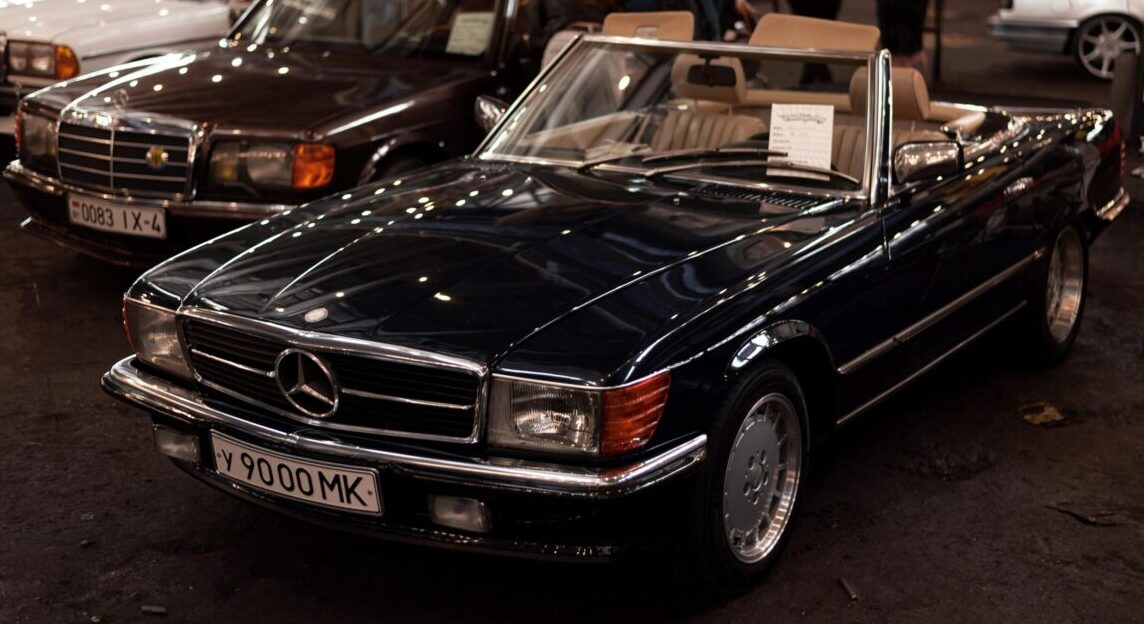
Better Than Factory: Recreating the Mercedes R107 Rosette with Metal 3D Printing
 Added on: May 18, 2026
 Author: OctoClub
2. What is metal additive manufacturing?
3. The Mercedes-Benz R107 rosette dilemma
4. Reverse engineering and the industrial 3D printing process
5. Why we chose 316L stainless steel
6. Achieving the perfect mirror-finish
7. The future of automotive heritage restoration
Recreating legends
What is metal additive manufacturing?
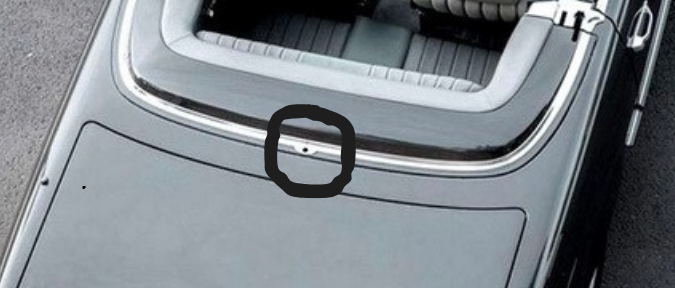
The Mercedes-Benz R107 rosette dilemma
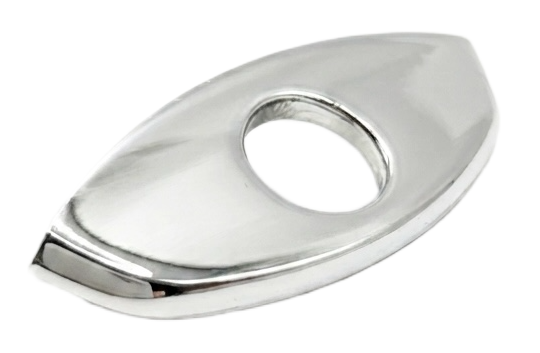
Reverse engineering and the industrial 3D printing process
- Reverse Engineering: We 3D-scanned an original component to capture its exact geometric dimensions.
- CAD Optimization: The digital model was refined in CAD software to guarantee tight tolerances for a seamless OEM fit.
- Slicing: The digital model was sliced into microscopic 2D layers to map the laser’s path.
- LPBF Printing: Inside the MetalFAB system, a mechanism spread an ultra-thin layer of industrial metal powder, which the laser precisely melted. This cycle repeated thousands of times to build the rosette from the ground up.
- Thermal Post-Processing: The finished parts underwent precise heat treatment to eliminate internal stresses, ensuring structural strength comparable to forged or CNC-machined components.
Why we chose 316L stainless steel
-
- Superior Hardness: It minimizes the risk of future scratches or dents during roof installation.
- Corrosion Resistance: It resists moisture and environmental exposure, preventing oxidation.
- Material Density: It provides an ideal, uniform base for high-end surface finishing.
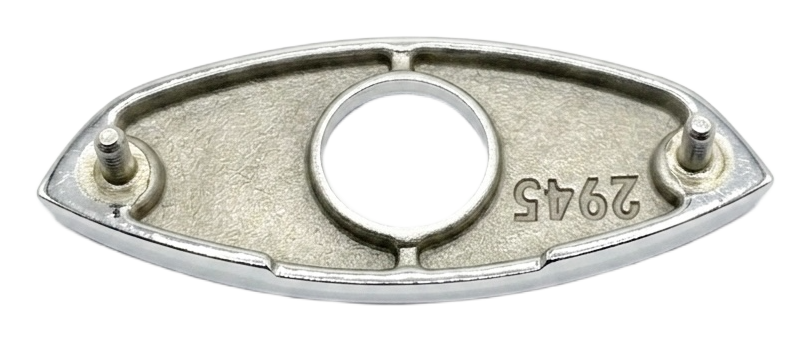
Achieving the perfect mirror-finish
The future of automotive heritage restoration
FAQ: Metal Additive Manufacturing & Mercedes-Benz R107 Restoration
Q: Why was LPBF technology used for the Mercedes R107 rosette?
A: Laser Powder Bed Fusion (LPBF) was chosen because it enables extremely high precision and complex geometry reproduction. For the Mercedes-Benz R107 chrome rosette, LPBF allowed the exact recreation of original contours while improving durability through modern engineering and 316L stainless steel.
Q: What role does reverse engineering play in the process?
A: Reverse engineering is used to digitally reconstruct the original part. A physical component is 3D-scanned to capture its exact geometry, which is then refined in CAD software. This ensures perfect fitment and OEM-level accuracy before the part is manufactured using industrial 3D printing.
Q: Can 3D printed metal parts achieve a mirror chrome finish?
A: Yes, but only after extensive post-processing. LPBF-printed parts have a micro-textured surface, so they must undergo vibratory finishing, precision hand polishing, and surface preparation before chrome plating. This creates a flawless mirror finish suitable for concours-level restoration.
Q: Is metal additive manufacturing suitable for full-scale production?
A: Increasingly yes. While originally used for prototyping, LPBF technology is now capable of producing end-use, low-volume industrial parts. It is especially valuable in the classic car industry, where demand is low but precision, authenticity, and quality are critical.
Are you already a proud owner of a Mercedes R107? If so, check out our selection of parts for this car at the following link:
https://octoclassic.com/product/mercedes-r107-chrome-rosette-softtop-hardtop-cover-a1077580141