






















































Ferrari hybrids under pressure
 Added on: February 12, 2026
 Author: OctoClub
1. A brutal shift in the Ferrari market
2. SF90 Stradale and 296 GTB: Depreciation at unprecedented speed
3. Is depreciation just because these cars are new?
4. The hybrid penalty and the celebration of ICE Ferraris
5. A strong Global market, not a Ferrari problem
6. Conclusion
A brutal shift in the Ferrari market
For years, brand-new mid-engine Ferraris were relatively safe bets in the exotic car world. Depreciation existed, but it was usually manageable and often softened by strong long-term desirability. That assumption has collapsed with Ferrari’s latest generation of hybrid supercars.
Models like the SF90 Stradale and 296 GTB are losing value at rates rarely seen before, while slightly older, non-hybrid Ferraris are surging in price. This divergence raises important questions: Is this just a temporary correction? Is the broader supercar market weakening? Or is the market actively rejecting Ferrari’s hybrid direction?
SF90 Stradale and 296 GTB: Depreciation at unprecedented speed
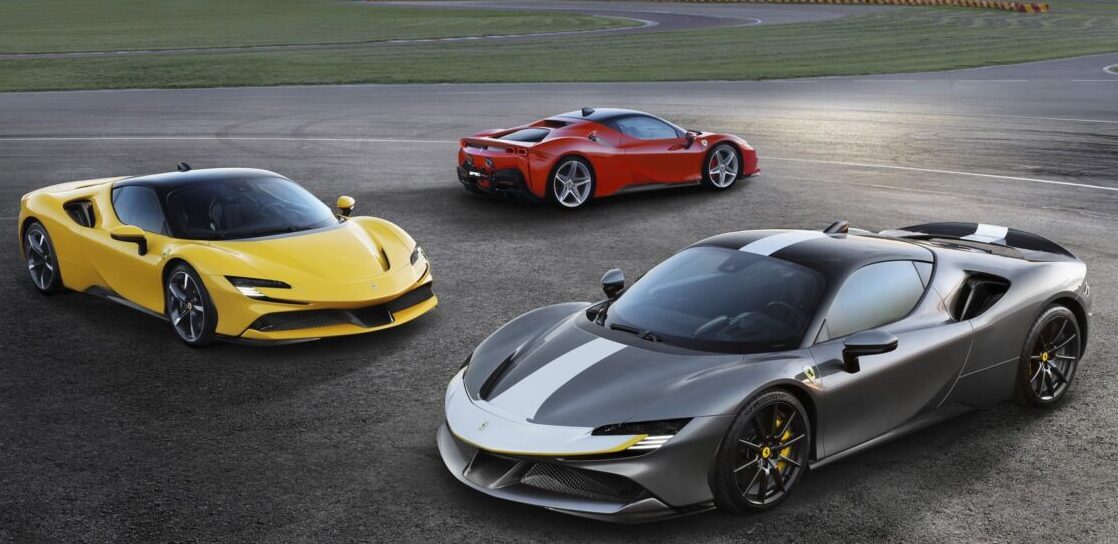
The SF90 Stradale has one of the most aggressive depreciation curves ever recorded for a modern Ferrari. Prices began falling almost immediately after launch. While depreciation slowed slightly in 2023, it remained severe. Last year alone, SF90 Coupes lost 15.5%, while Spiders lost 11.7%.
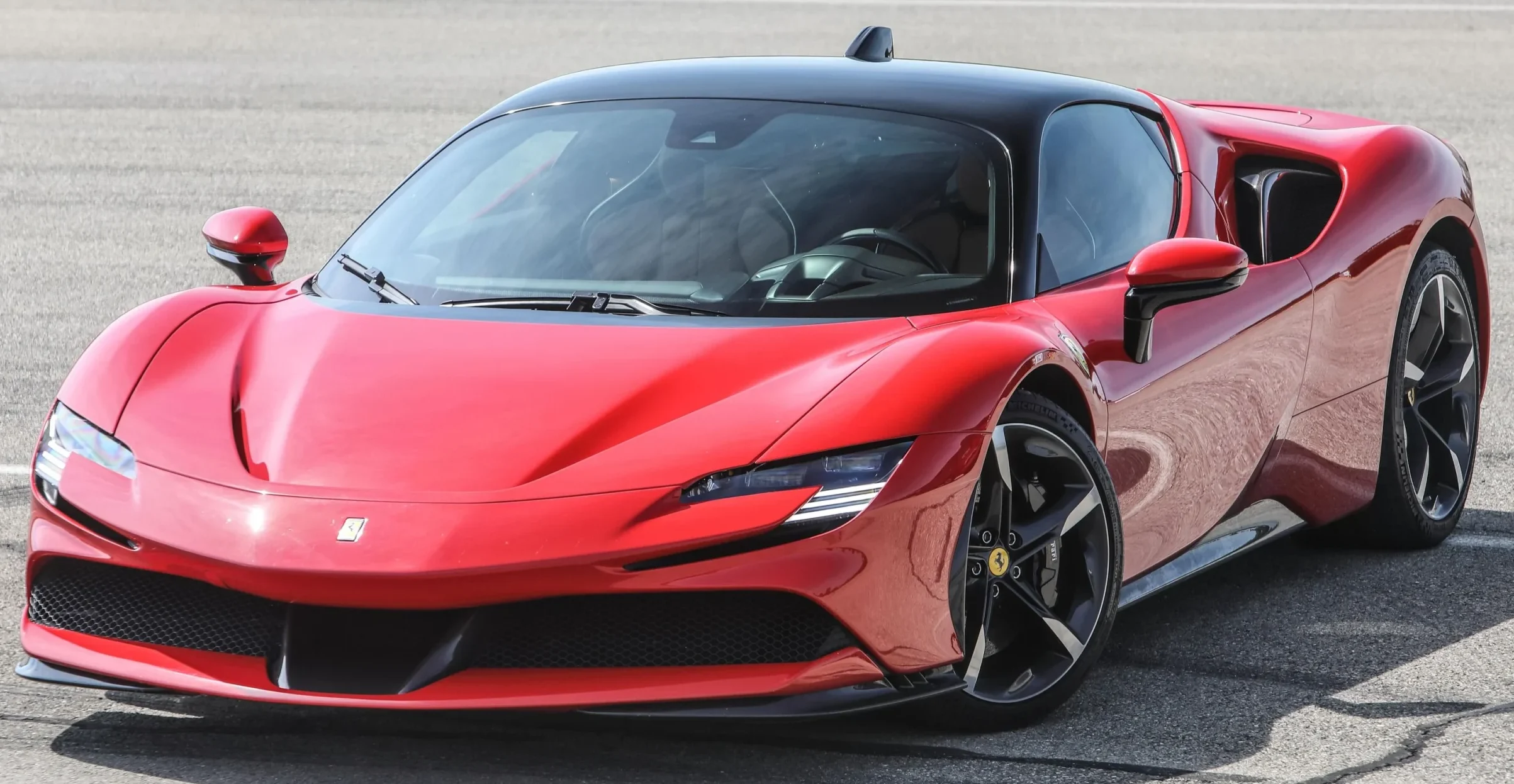
With an original MSRP plus around 25% in options, many SF90 Coupes were delivered at roughly €740,000. Today, owners are often facing losses exceeding €300,000.
More detailed data does suggest that the worst phase may be behind us. Older coupes show flattening trends, supply is decreasing, cars are selling slightly faster, and discounts on unsold inventory are becoming less aggressive. Still, the financial damage has already been substantial.
The 296 GTB follows a very similar pattern. Prices dropped quickly after launch, with Coupes down 18.1% and Spiders down 14.4% last year. While depreciation may be slowing, the signs are weaker than in the SF90 market. Notably, prices for 296 Spiders now overlap with SF90 Coupes – an unthinkable scenario just a few years ago.
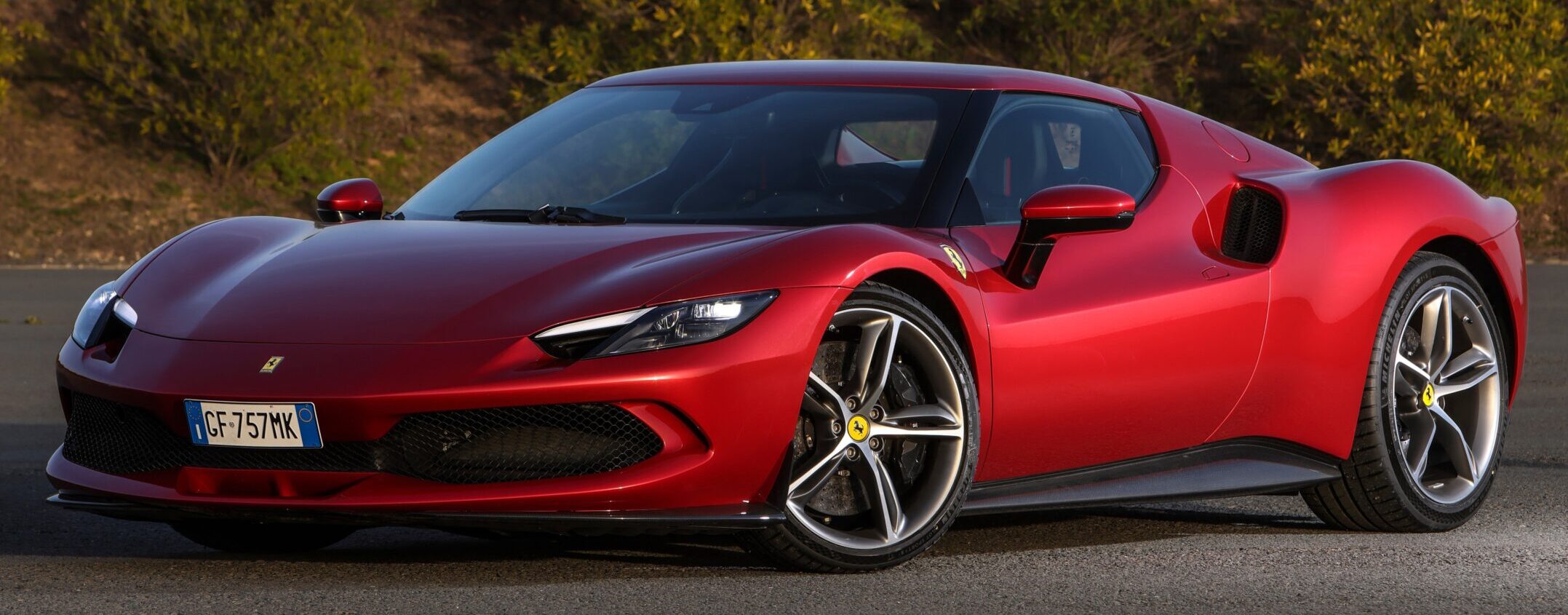
For buyers, this means depreciation is a major component of ownership cost for both models.
Is depreciation just because these cars are new?
When depreciation is unavoidable, limiting additional expenses becomes crucial. High-performance Ferraris are especially vulnerable to damage from speed bumps, road debris, and windshield impacts – repairs that can further erode value.
Modern solutions such as skid plate systems and windshield protection films help mitigate these risks. Ultra-thin, custom-fitted skid plates created using 3D laser scanning technology require no drilling or permanent modification, while windshield protection films reduce the risk of cracks and chips. These preventative measures won’t stop market depreciation, but they can prevent unnecessary value loss through avoidable damage.
One common argument is that the SF90 and 296 are depreciating simply because they are new. However, like-for-like comparisons strongly contradict this theory.
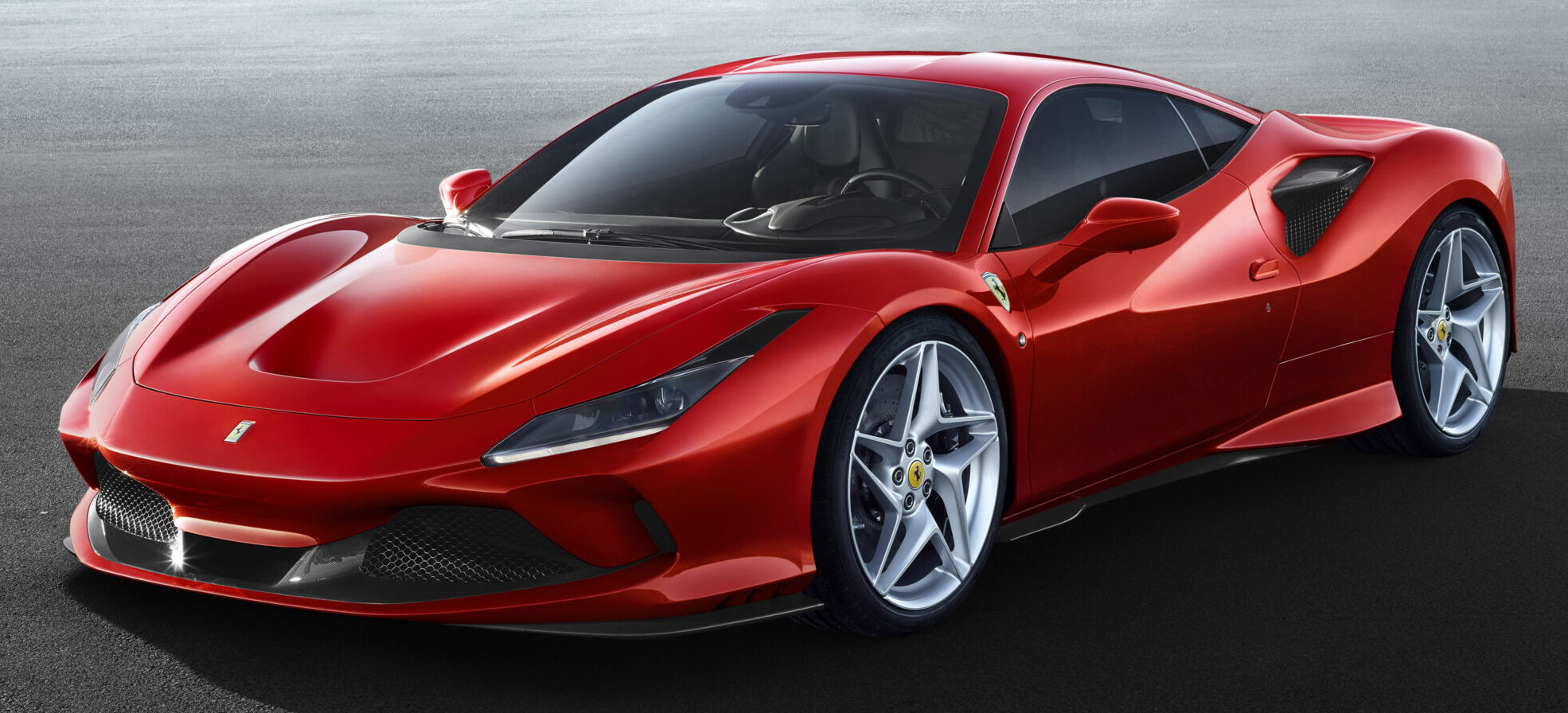
From September 2023 onward, the SF90 Coupe and F8 Spider markets were very similar in terms of model year distribution, mileage, and supply. Yet the price performance could not be more different. Since then, SF90 Coupes lost 32.1%, while F8 Spiders lost just 9.9%. The result is nearly identical when comparing only 2022 cars.
The same applies to the 296 GTB. A 2023 296 Coupe lost roughly 25%, compared to just 8% for a 2023 F8 Spider. Even traditionally depreciation-heavy front-engine Ferraris performed better. The 812 GTS, for example, lost 10.5%, while SF90 Coupes lost 22.4% over a comparable period.
These comparisons make one thing clear: the extreme depreciation of the 296 and SF90 is not due to age.
The hybrid penalty and the celebration of ICE Ferraris
Looking at year-over-year price changes across Ferrari’s lineup since the early 2000s reveals a striking pattern. Hybrid models sit at the very bottom of the chart, losing value at rates no other Ferraris approach.
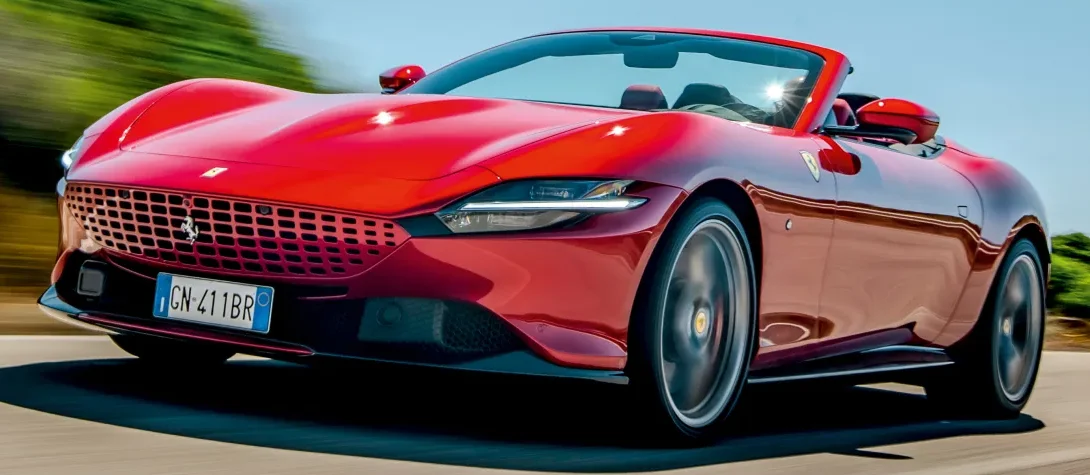
Among full ICE models, the Roma Coupe depreciates the fastest at 6.8%, while most others are flat or appreciating. Models like the F8, 360, 599, 488, F430, FF, and F12 are stable or trending upward.
Then come the special models – and the numbers are extraordinary. 360 Challenge Stradales, 458 Speciales, 488 Pistas, and F430 Scuderias are all up more than 40%. These gains have been confirmed by market participants and are not statistical anomalies. While momentum has slowed recently, prices remain far above pre-pandemic levels.
Even models that were historically weak performers, such as the California and California T, have flattened out. In short, the non-hybrid Ferrari market is not just healthy – it is thriving.
A strong Global market, not a Ferrari problem
The broader sports and supercar market further reinforces this conclusion. Across a wide range of performance cars – from Toyota Supras to Porsche 911s to Ferrari 812s – the average annual depreciation rate dropped from roughly 4.8% to around 1% in 2025. This is not the sign of a weak market.
Even other hybrid supercars are holding up better. The McLaren Artura, for example, lost around 8.3% year over year, compared to 18.1% for the Ferrari 296.
These trends are also visible outside the US. In Germany, F8s remained stable while 296s fell 6.8% over the same period. Special models like the 458 Speciale show similar price trend shapes in both markets, though gains are smaller in Europe – about 19.2% in Germany versus 56% in the US.
This confirms that what we are seeing is not a regional anomaly.
Conclusion
For value-conscious buyers, the takeaway is clear. Low-mileage, nearly new 296 GTBs and SF90 Stradales represent poor value propositions at present. Older models such as the F8, 812, and earlier V8 and V12 Ferraris are holding up far better financially.
The performance gap is undeniable – but so is the depreciation gap. The market, it seems, is delivering a clear verdict: when it comes to Ferraris, passion still favors combustion.
Q: Why are Ferrari SF90 Stradale and 296 GTB prices falling so quickly?
A: The Ferrari SF90 Stradale and 296 GTB are depreciating faster than previous Ferrari models due to their high launch prices, increased supply, and weaker collector demand for hybrid supercars. Many buyers still place a higher value on the emotional appeal of traditional combustion-engine Ferraris.
Q: Are hybrid Ferraris losing value faster than petrol Ferraris?
A: Yes. Current market data shows that hybrid Ferrari models such as the SF90 Stradale and 296 GTB are losing value significantly faster than many combustion-only models like the F8 Tributo, 812 Superfast, and Ferrari special-series cars.
Q: Why are older Ferrari models increasing in value?
A: Older Ferraris benefit from collector demand for naturally aspirated engines, unique driving experiences, limited production numbers, and stronger emotional connections. Models such as the 458 Speciale, 488 Pista, and F430 Scuderia have become highly desirable.
Q: Is the Ferrari F8 Tributo a better buy than the SF90 Stradale?
A: For buyers concerned about depreciation, the F8 Tributo currently appears to offer stronger value retention. Its twin-turbo V8 engine and connection to Ferrari’s traditional sports car heritage make it more appealing to many enthusiasts.
Q: Which Ferrari models hold their value best?
A: Limited-production and enthusiast-focused models generally perform the strongest. Cars such as the Ferrari 458 Speciale, 488 Pista, F430 Scuderia, and selected V12 models have shown excellent value retention due to rarity and collector demand.
Inspired by the analysis of our friend @fourwheeltrader. Make sure you check his other videos
https://www.youtube.com/@fourwheeltrader
Are you already a proud owner of a Ferrari? If so, check out our selection of parts for this car at the following link:
https://octoclassic.com/product-category/ferrari
Photos sources: carexpert.com.au, Motor Authority, hdcarwallpapers.com, evo.co.uk