




















































Porsche 911 GT3: Early warning signs in a strong market
 Added on: February 17, 2026
 Author: OctoClub
1. A market that looks healthy at first glance
2. How the 992.1 GT3 reached its current price level
3. Early price signals at the edge of stability
4. Supply growth and the weight of inventory
5. Older generations tell a similar story
6. Why GT3s are behaving differently than other performance cars
7. Conclusion
A market that looks healthy at first glance
At first sight, the Porsche 911 GT3 market appears confident. Prices in 2025 are higher than a year earlier, listings remain plentiful, and demand still exists. For many buyers, this creates the impression of a safe moment to enter the market. However, beneath the surface, subtle changes are forming-changes that historically have often preceded a shift in price direction.
What makes this moment interesting is not a dramatic fall, but the combination of small, measurable signals that together suggest growing fragility, especially for recent GT3 generations.
How the 992.1 GT3 reached its current price level
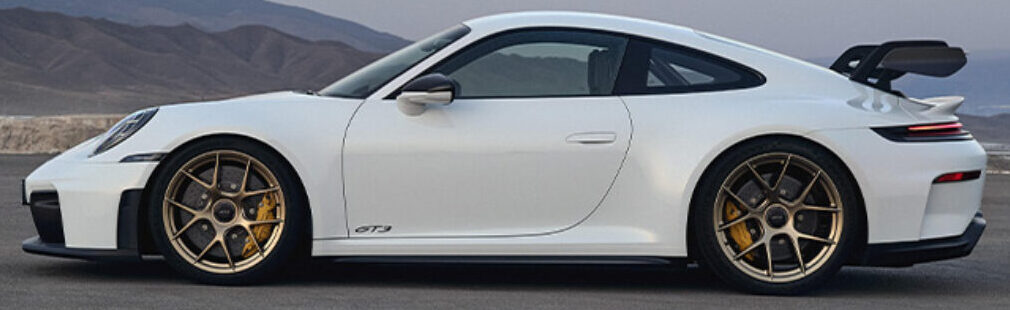
The 992.1 GT3 entered the market in 2022 at prices well above its original list price. Like most performance cars of that period, it quickly corrected as the wider market cooled. By 2023, prices stabilized, creating the impression that depreciation had largely paused.
That stability did not last. In 2024, mild weakness appeared, with prices slipping by up to 5%. Then, in 2025, a new factor changed market behavior: the introduction of the 992.2 GT3 with an MSRP roughly €55,000 higher than the original 992.1. This pushed used prices up by around 4% early in the year.
By mid-2025, however, the momentum slowed. Prices recovered some losses but now show only a modest year-over-year increase of roughly 5%, a figure that masks growing internal pressure.
Early price signals at the edge of stability
The overall price trend for the 992.1 GT3 still looks stable, but recent transactions tell a more nuanced story. Actual price points have begun drifting toward the lower edge of the statistical confidence range. This does not indicate a collapse, but it does represent the first technical warning sign.
More importantly, the decline is uneven. Cars with very low mileage-traditionally the strongest part of the market-have seen the largest reductions. Over the last six months, GT3s with under 12,000 km lost close to 5% in value, while higher-mileage cars declined by only about 1%. This behavior suggests that even top-tier examples are no longer immune.
Supply growth and the weight of inventory
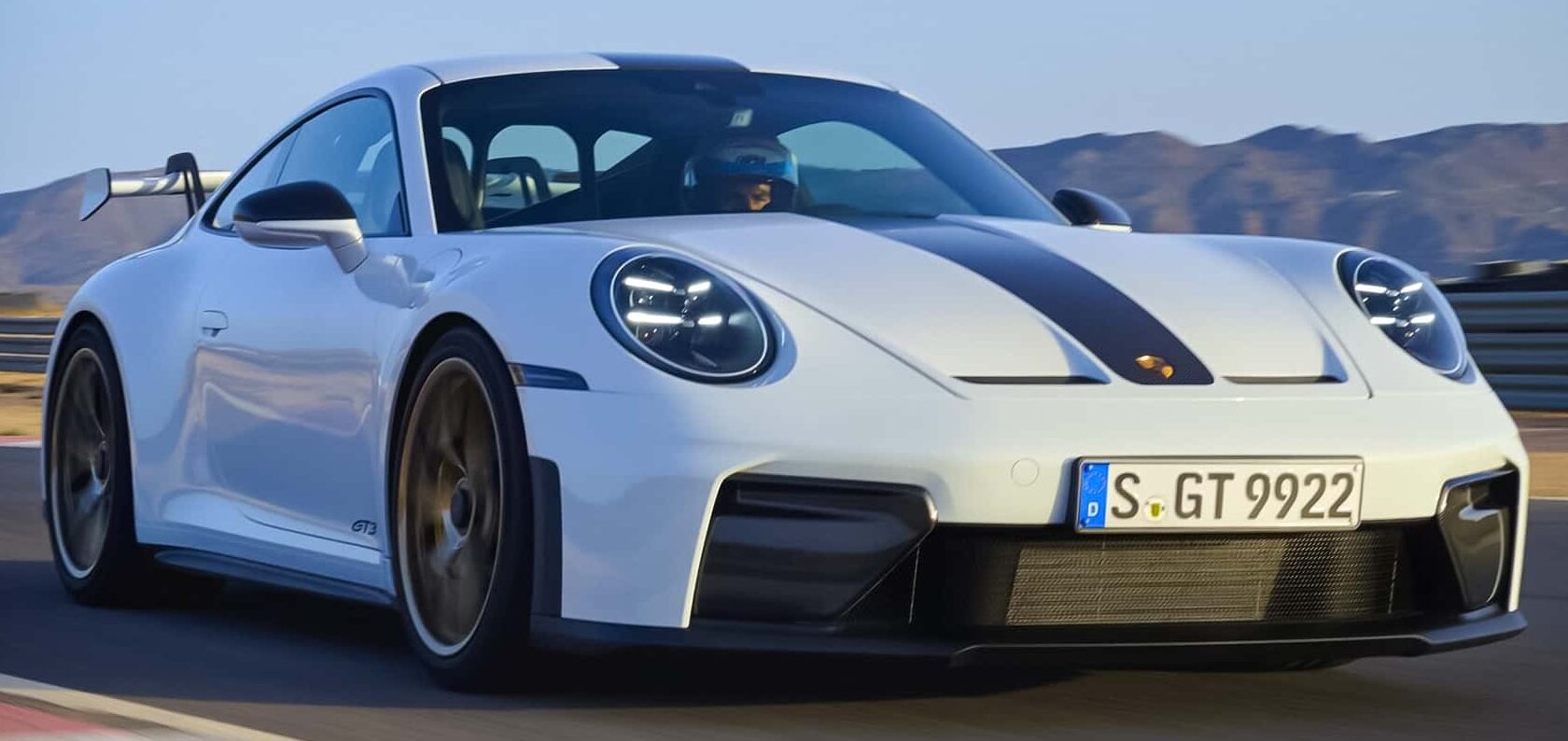
While prices attract attention, supply tells a deeper story. Listings for the 992.1 GT3 have surged to over 200 cars, an increase of more than 80% compared to the same period last year. This growth is driven primarily by early production cars from model year 2022.
Whether owners are reacting to expiring warranties or upgrading to the newer 992.2 is less important than the effect itself: supply has expanded rapidly, while demand has not kept pace.
This imbalance becomes visible through carried-over inventory. Around 43% of GT3s listed earlier in the year remained unsold months later, nearly double the level seen a year ago. Cars are staying on the market longer, quietly weakening sellers’ negotiating power.
Older generations tell a similar story
The Touring version of the 992.1 GT3 reflects the same pattern, often more clearly. Prices have dipped further, in some cases moving below their expected confidence range. Supply has peaked, and unsold inventory has increased in parallel.
Older generations behave differently. The 991.1 GT3 has remained largely stable, while the 991.2 shows stronger gains, with year-over-year increases of around 10%. However, even here, confidence bands are flattening, suggesting that most of the upside may already be priced in.
Earlier models such as the 997 and 996 GT3 operate in much smaller markets. Their limited supply creates higher uncertainty, but prices appear broadly stable, with moderate gains that reflect rarity rather than speculative momentum.
Why GT3s are behaving differently than other performance cars
What makes this situation notable is its contrast with the wider performance car market. Other segments-modern supercars and high-end sports cars-have recently shown strengthening or stabilizing trends.
Short-term market indicators for performance cars overall suggest neutral to slightly positive movement. The GT3, particularly in its newest forms, stands out by showing early signs of cooling instead. This divergence increases the relevance of the warning signals, even if they remain subtle.
Conclusion
This is not a market crash, nor does it suggest dramatic losses ahead. Instead, it marks a return to more natural behavior after years of distortion. For buyers who prioritize value, timing now matters more than urgency.
Waiting several months may reveal whether prices resume gradual depreciation or settle into a new plateau. Elevated inventory creates opportunities for negotiation, especially on cars that have been listed for extended periods.
From a value perspective, the current moment may be one of the least attractive entry points since post-pandemic prices stabilized-but also far less risky than buying at the absolute peak. The data suggests caution, not fear, and rewards patience over impulse.
Q: Are Porsche 911 GT3 prices starting to fall?
A: Not significantly yet. The Porsche 911 GT3 market remains strong, but recent data shows early signs of cooling. Increasing inventory, longer selling times, and small price declines in certain segments suggest that the market is becoming less aggressive than during previous years.
Q: Why are Porsche 992.1 GT3 prices weakening?
A: The main factors are increased supply, buyers moving toward newer 992.2 GT3 models, and a return to more normal market conditions after the pandemic-era price surge. More cars available for sale gives buyers more leverage.
Q: Is the Porsche 992.1 GT3 a good investment?
A: The 992.1 GT3 has many qualities that collectors value, including a naturally aspirated engine, manual transmission availability, and motorsport heritage. However, current prices may already reflect much of that demand, making future appreciation less certain.
Q: Is the Porsche 992.2 GT3 affecting 992.1 GT3 prices?
A: Yes. The introduction of the 992.2 GT3 changed buyer behavior. Its higher MSRP pushed some used prices upward initially, but it also encouraged some owners of 992.1 models to sell and upgrade, increasing supply.
Q: Are older Porsche GT3 models safer investments than newer ones?
A: Older GT3 generations may have stronger collector appeal because of lower production numbers and established historical importance. However, their smaller markets create more price volatility, and condition plays a major role.
Q: Will Porsche GT3 prices drop further?
A: A major collapse is unlikely based on current data. However, gradual depreciation or price stabilization is possible, especially if inventory continues growing and buyers become less willing to pay peak-market prices.
Q: What should buyers look for when purchasing a used Porsche GT3?
A: Buyers should focus on service history, mileage, accident records, options, condition, and whether the car has been modified. For GT models, originality and maintenance documentation have a significant impact on long-term value.
Inspired by the analysis of our friend @fourwheeltrader. Make sure you check his other videos
https://www.youtube.com/@fourwheeltrader
Are you already a proud owner of a Porsche 911? If so, check out our selection of parts for this car at the following link:
https://octoclassic.com/product-category/porsche/911
Photos sources: carbuzz.com, hiconsumption.com, insidethehood.com