


































How to choose the right car part?
 Added on: November 13, 2026
 Author: OctoClub
1. Identify the exact make, model and generation
2. Check the production year and facelift differences
3. Pay attention to the engine and equipment version
4. Compare part numbers and technical specifications
5. Don’t rely on appearance alone
6. Check whether installation requires additional components
7. What information should You prepare before ordering?
Finding the right replacement part for a classic car can sometimes be more complicated than expected. Even vehicles belonging to the same model range can have different components depending on their production year, engine specification, body style or equipment version.
At OctoClassic, we work with owners of classic cars and understand how important it is to get these details right. From interior components and exterior accessories to practical upgrades, the first step towards a successful purchase is making sure the part is compatible with your vehicle.
Here are seven things worth checking before ordering.
Identify the exact make, model and generation
Start with the basic information about your vehicle: manufacturer, model and generation. This is particularly important because many manufacturers have produced several generations of the same model, often with significant differences between them.
For example, the BMW 3 Series includes generations such as the E30, E36, E46 and E90. Similarly, the Mercedes-Benz SL has been produced in several distinct generations, including the R107, R129 and R230.
Although these vehicles share a model name, their components are not necessarily interchangeable.
When identifying your car, check:
- Manufacturer and exact model.
- Model generation or chassis designation.
- Body style, such as coupe, sedan, convertible or estate.
- Specific model variant, where applicable.
The chassis code is especially useful when searching for classic car parts. It helps narrow down the correct application and makes it easier to distinguish between generations that may look similar at first glance.
Check the production year and facelift differences
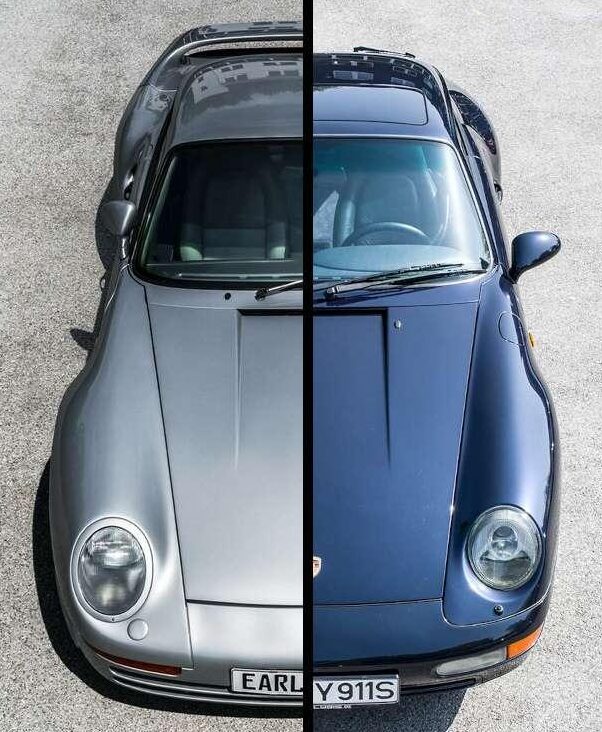
The production year is one of the most important details when selecting a replacement component. A vehicle’s generation may remain unchanged for several years, but manufacturers often introduce smaller or larger updates during that period.
These changes are commonly known as facelifts or model updates. They can affect headlights, bumpers, dashboards, centre consoles, switches, trim pieces and other components.
For instance, the BMW E36 and Mercedes-Benz W124 both underwent production changes that resulted in differences between earlier and later versions. Porsche models can also have important component variations between production phases, even when the overall design remains familiar.
Before ordering, check:
- The exact production year of your vehicle.
- Whether it is an early or facelift version.
- Whether the manufacturer changed the component during production.
- The production range specified in the product description.
It is also worth remembering that the registration year does not always correspond to the actual production year. If you are unsure, your VIN can help establish the vehicle’s manufacturing details.
Pay attention to the engine and equipment version
Two cars from the same generation and production year can still have different specifications.
Engine versions are particularly important when choosing mechanical components, as different configurations may require different dimensions, connections or mounting arrangements.
However, equipment differences also matter, especially when selecting interior and exterior parts.
Consider checking:
- Engine type and displacement.
- Petrol or diesel configuration.
- Transmission type, where relevant.
- Factory equipment and optional extras.
- Interior trim and dashboard configuration.
- Left-hand drive (LHD) or right-hand drive (RHD).
For example, different equipment versions of a BMW E30 or Mercedes-Benz W201 may feature different interior details or fittings. Similarly, Porsche models can have variations depending on their engine, trim level and optional equipment.
The more precise your vehicle information is, the easier it becomes to identify a suitable replacement part.
Compare part numbers and technical specifications
One of the most reliable ways to identify a replacement component is by checking its part number.
Manufacturers assign individual numbers to components, allowing them to be distinguished even when they look almost identical. Comparing the number of your existing part with the one listed for a replacement can help confirm whether they correspond.
If the original part number is available, check:
- Whether the numbers match.
- Whether the manufacturer has introduced a superseding part number.
- Whether the replacement is listed for your specific model and production range.
- Whether the dimensions and mounting points are identical.
Remember that part numbers can change over time. A newer number may replace an older one without necessarily indicating a compatibility problem.
If you cannot find the original number, compare the technical specifications and consult reliable parts catalogues whenever possible.
Don’t rely on appearance alone
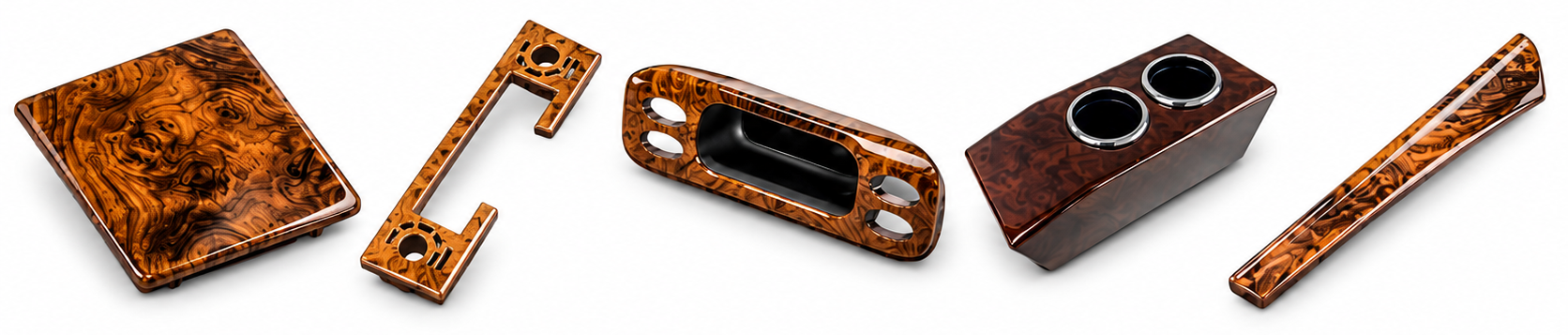
A replacement part may look identical to the original but still differ in important details.
This is particularly common with interior components, trim pieces, switches, buttons and centre console accessories. Small differences in dimensions, mounting points or connections can determine whether a component fits correctly.
When comparing a product with your existing part, pay attention to:
- Shape and overall dimensions.
- Mounting points and fixing methods.
- Electrical connectors, if applicable.
- Material, finish and colour.
- Compatibility with surrounding components.
This is especially important with classic cars, as some vehicles have been modified or repaired during their lifetime. The parts currently installed may not always match the original factory specification.
Product photographs can be helpful, but they should be considered alongside the technical description and compatibility information.
Check whether installation requires additional components
Finding a part that fits your vehicle is only one part of the process. You should also understand how it is installed and whether anything else is needed.
Some products are designed as direct replacements for existing components, while others are upgrades that require additional connections, mounting elements or minor modifications.
For example, an electronic accessory may need a suitable power supply, while an interior upgrade could require the removal of existing trim.
Before purchasing, make sure you know:
- Whether the part is a direct replacement or an upgrade.
- Whether additional mounting elements are included or required.
- Whether existing factory connections can be used.
- Whether any electrical work is necessary.
- Whether installation requires specialist tools or professional assistance.
Checking these details beforehand helps avoid unexpected complications and makes the installation process much easier.
What information should You prepare before ordering?
If you are unsure which part is right for your vehicle, gathering a few details before making a purchase can make a significant difference.
We recommend preparing the following information:
- Make and model: The exact manufacturer and model designation.
- Production year: Preferably the actual manufacturing year.
- Engine version: Particularly important for mechanical and engine-related components.
- VIN: Useful when additional vehicle identification is necessary.
- Original part number: If available, this can help narrow down the search.
- Photographs: Pictures of the existing component from different angles can help identify its design and mounting details.
You do not necessarily need every piece of information for every product. For a simple interior accessory, the model generation and console configuration may be sufficient, while more complex components may require a much more detailed specification.
At OctoClassic, we believe that choosing the right replacement part should be as straightforward as possible. That is why checking product descriptions and compatibility details before ordering is always a good starting point.
If you are unsure about the compatibility of a particular part or need help finding the right product for your car, don’t hesitate to get in touch with us. Our team will be happy to help you identify the right component and guide you towards a suitable solution. Simply share your car’s make, model, production year, VIN and any other relevant details, and we’ll do our best to help you find exactly what you need.
Are you already a proud owner of a Classic Car? If so, check out our selection of parts for this car at the following link:
Photo sources: elferspot.com, bmw36walls.blogspot.com