

























































The 1997 Mercedes SL: Subtle evolution of a timeless icon
 Added on: December 31, 2025
 Author: OctoClub
1. Design and interior refinements
3. Pricing, power, and production
4. Comfort, tech, and convenience
5. The global picture: America, Japan, and beyond
Design and interior refinements
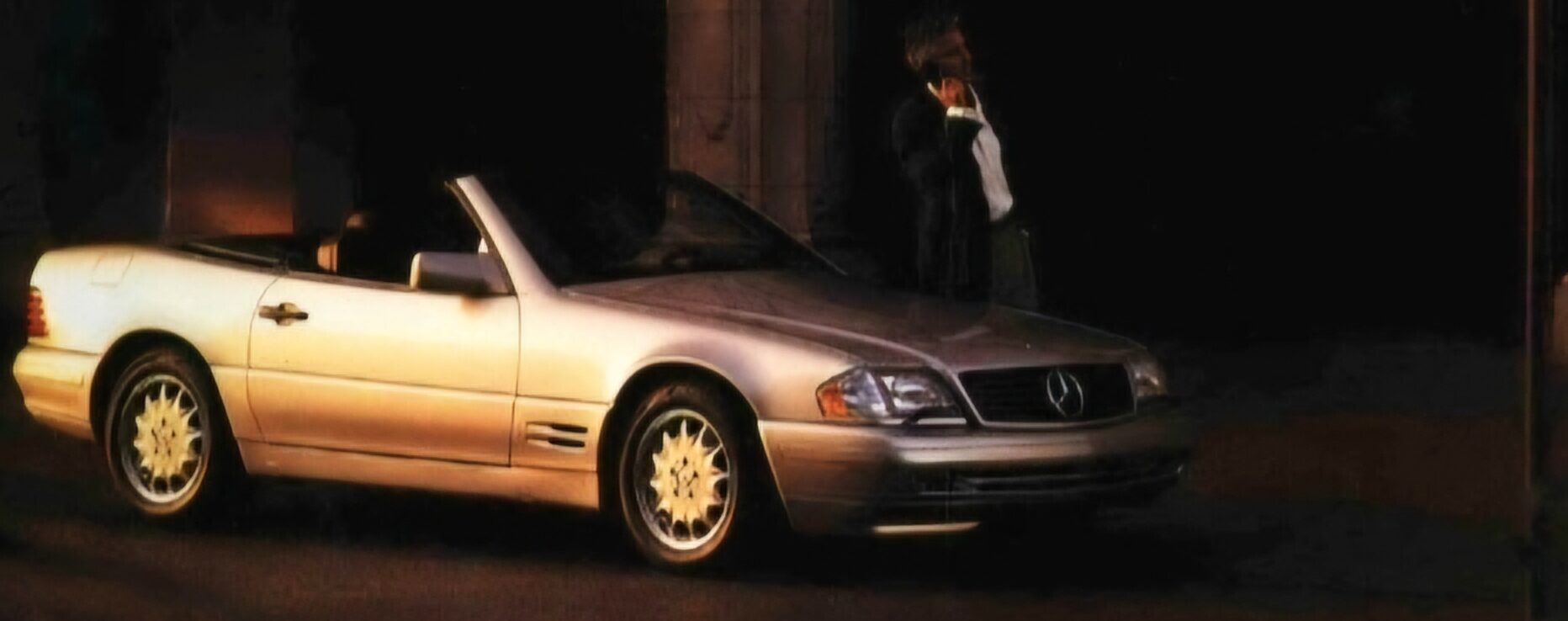
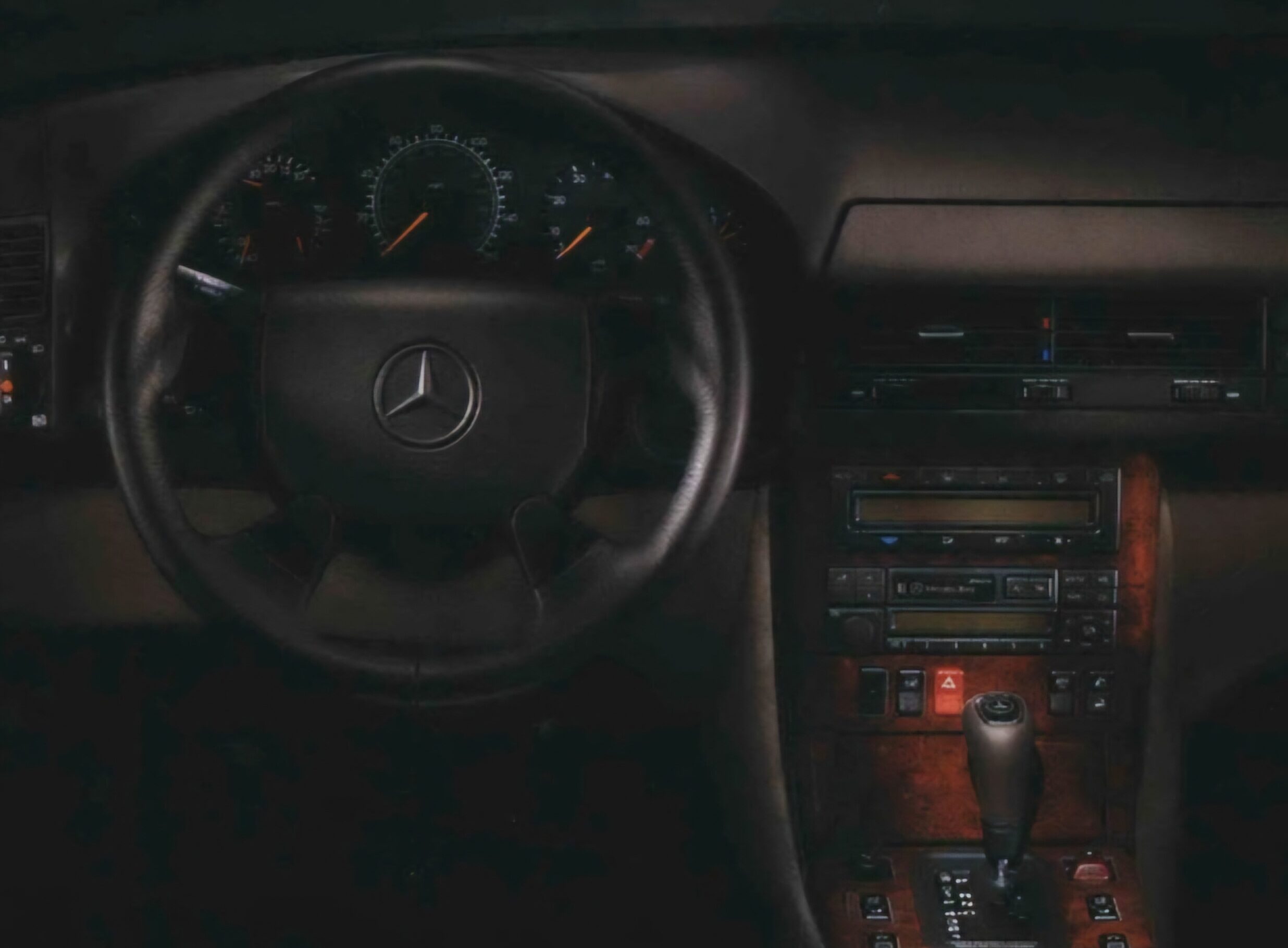
As the 1997 season began, Mercedes applied subtle but meaningful updates to the R129 SL. In September 1996, the upholstery range was refreshed — new material codes replaced the old 071/271/571 series, offering one cloth option, six standard leathers, and three luxurious “Exclusive” leathers. Walnut wood trim continued to accentuate the cabin’s understated elegance, while the same trio of hood colors carried over unchanged.
Outside, only one visible modification was made: the chrome boot plinth gave way to a black one, giving the SL a cleaner, more contemporary look. Small adjustments, yes — but perfectly in line with Mercedes’ philosophy of refinement over reinvention.
Safety takes the spotlight
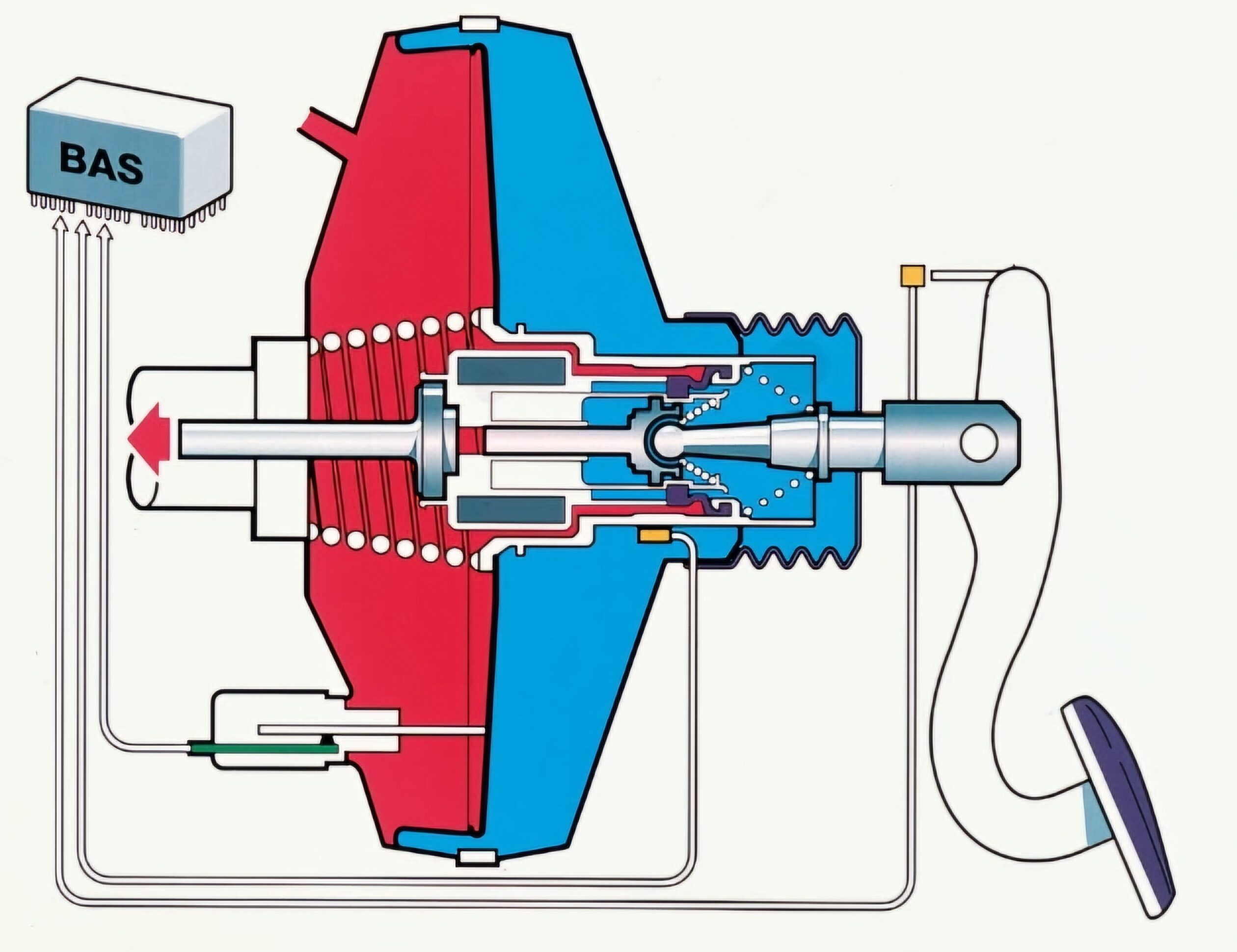
November 1996 marked a milestone in automotive safety: the introduction of Brake Assist (BAS). The system could detect emergency braking situations and automatically apply maximum braking pressure in a fraction of a second. When paired with ABS, BAS significantly shortened stopping distances — and by December, it was standard on both the SL and S-Class models.
Another subtle but crucial change came with the addition of a passenger-seat weight sensor, ensuring that the airbag would not deploy if a child or no passenger was present — another example of Mercedes’ relentless focus on occupant protection.
Pricing, power, and production
In March 1997, Mercedes raised the prices of the SL280, SL320, and SL500 by around €870, while the SL600 and SL60 AMG remained unchanged. The optional extras list also stayed largely stable since 1995.
That same spring, the company opened a new “factory of the future” in Bad Cannstatt, producing the advanced M112 and M113 engines — fuel-efficient, three-valve-per-cylinder V6 and V8 units designed to replace the aging straight-sixes and update the existing V8 lineup. Using environmentally friendly production methods, the plant achieved its first million engines in just three years — a testament to Mercedes’ industrial efficiency.
Comfort, tech, and convenience
By June 1997, the SL gained several comfort and technology upgrades. Repeater indicator lights became standard in Germany, and a new ASSYST service reminder was integrated into the odometer.
Buyers could now specify folding power mirrors for €210, and auto-dimming driver’s and rearview mirrors for €230 (standard on the SL600). Audio options expanded too: the new “Special” radio/CD unit cost €90, while the premium “Exquisite” system was priced at €350, included free on the SL600. A Bose sound system, CD changer, and a €40 CD storage box completed the infotainment package.
The global picture: America, Japan, and beyond
Across the Atlantic, U.S. models ranged from €71,400 to €110,200 and gained new features such as rain-sensing wipers, a transponder key, and a built-in garage door opener. The ASR traction control system became standard on the SL320, and a panoramic glass roof was finally available for €3,100. The newly introduced Sport Package added an AMG body kit, 18-inch AMG wheels, “Sport” badging, and interior upgrades, appealing to American buyers seeking a sportier flair.
Meanwhile, the “40th Anniversary Edition SL” celebrated four decades since the legendary 300SL Roadster. Limited to 250 SL320s and 500 SL500s, it featured exclusive colors — Quartz Blue or Crimson Red — bespoke interiors, wood trim, heated seats, and 17-inch “Evo II” wheels.
Elsewhere, the SL’s international presence remained strong. Prices started at €66,000 in Japan for the SL320 and climbed to €155,700 for the AMG version. In Australia, the SL280 began at €125,800, while the SL600 topped the range at €230,800. AMG’s Japan lineup even included the rare SL70 AMG, a 7.0-litre V12 powerhouse costing around €41,600 for the conversion alone.
Legacy of the 1997 SL
The 1997 model year proved highly successful, especially in the U.S., where Mercedes-Benz sales soared — crossing the 100,000-unit mark for the first time. Over 8,000 SLs were sold, with the SL500 leading the charge.
British buyers faced rising prices, with standard models up by €3,200–€4,100 and the AMG version hitting €152,500, reflecting the car’s luxury positioning.
The 1997 SL didn’t need a revolution. It embodied the art of steady evolution — blending technological sophistication, safety innovation, and enduring design. Even today, it stands as a symbol of how Mercedes-Benz mastered the formula for the perfect grand tourer: elegant, effortless, and unmistakably timeless.
Q: What changed in the Mercedes-Benz R129 for the 1997 model year?
A: The 1997 R129 received several refinements rather than a major redesign. Updates included revised upholstery options, a black boot plinth, Brake Assist (BAS), a passenger-seat weight sensor, ASSYST service monitoring, and several new comfort and audio features.
Q: Did the 1997 Mercedes R129 have Brake Assist?
A: Yes. Brake Assist (BAS) was introduced on the R129 in late 1996 and became standard by December. The system was designed to recognize emergency braking and apply maximum braking force more quickly.
Q: What engines were available in the 1997 Mercedes R129?
A: The R129 range included several engine options, from the SL280 and SL320 to the V8-powered SL500 and the flagship SL600. AMG versions were also available, including the powerful SL60 AMG.
Q: Did the 1997 R129 receive any interior changes?
A: Yes. Mercedes revised the upholstery range in 1996, introducing new material codes and additional leather choices. Buyers could choose from standard and Exclusive leather options, while walnut wood continued to be used throughout the cabin.
Q: What technology was introduced to the R129 in 1997?
A: Several convenience and electronic features were added or upgraded, including the ASSYST service reminder, standard repeater indicators in Germany, optional folding electric mirrors, automatic-dimming mirrors and upgraded radio/CD systems.
Q: Why is the R129 still popular with classic Mercedes enthusiasts?
A: The R129 combines traditional Mercedes-Benz engineering with modern-for-its-era safety and comfort technology. Its build quality, elegant design, wide engine range and relatively sophisticated equipment make it particularly appealing as a modern classic.
Are you already a proud owner of a Mercedes R129? If so, check out our selection of parts for this car at the following link:
https://octoclassic.com/product-category/mercedes-benz/r129