



















































Which front-engine sports cars hold their value?
 Added on: July 24, 2025
 Author: OctoClub
1. Which models hold their value best?
2. Lexus LC500
4. Ferrari GTs
7. Mazda MX-5
8. Corvette C7
Which models hold their value best?
Front-engine GT and sports cars often come with a double-edged sword — they deliver a perfect balance of sportiness and comfort, yet they are notorious for their high depreciation, costing owners tens of thousands of euros. But is this true for every model? Let’s dig into the data and find out which cars you should avoid if resale value matters, and which ones deserve a spot on your shortlist.
Lexus LC500

The Lexus LC500 is popular among enthusiasts but often overlooked by value-conscious buyers. After peaking during the pandemic, prices dropped relatively fast from summer 2022 to early 2024. Since then, the depreciation curve has flattened significantly: coupe prices fell by only 1.2%, while convertible prices have remained almost flat.
Inventory data shows these cars sell quickly, with small discounts on unsold stock. If you’re after a front-engine GT that holds its value, the LC500 is an excellent choice.
The Classic SLS AMG

After a price correction in 2022 and 2023, SLS AMG prices have stabilized. The base models show a small increase of about 0.9%, and GT versions jumped nearly 13%, though price fluctuations remain high. These models remain desirable and show signs of value stability.
Ferrari GTs

Ferrari’s front-engine GT market is diverse:
-
California: Experienced a linear decline after summer 2022, with prices falling around 7.7% to 8.9% last year.
-
Roma: Depreciated roughly 12.5% last year, with newer 2023 models losing more value (up to 14.3%) compared to older 2021 examples.
-
812 Superfast and GTS: The 812 GTS stabilized after initial drops, while Superfast models depreciated about 7.8% last year.
-
F12 Berlinetta: Prices are stable, hovering around €270,000 with minimal changes in recent years.
-
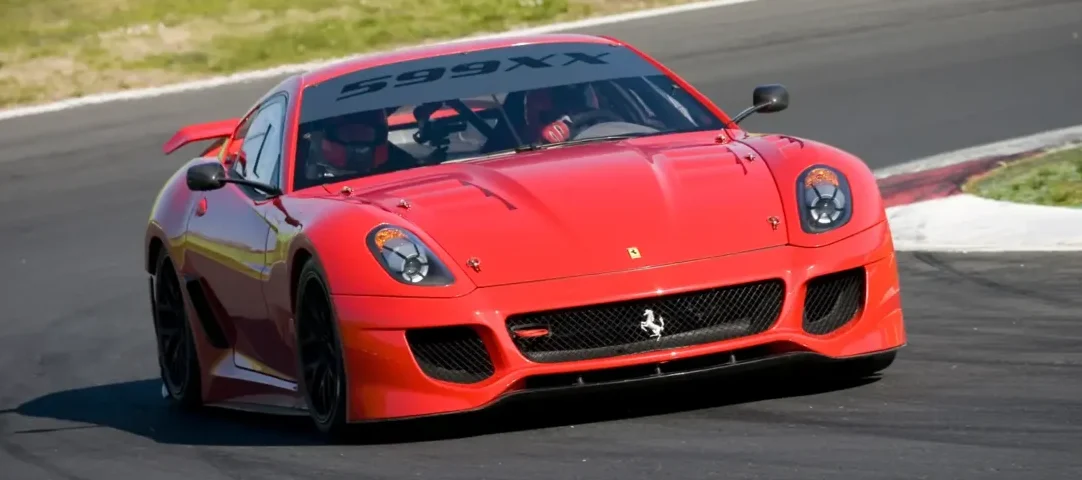
599 GTB: Slight dip in 2023 but recovered recently, showing a modest 3.1% increase.
Jaguar Sports Cars

Jaguars offer a more budget-friendly front-engine GT experience. First-generation V8 models hover around €30,000, with prices mostly flat in 2024 but dipping slightly (-7.5%) year-on-year. High-performance RS and SVR trims continue to depreciate faster, losing around 6-11%, partly due to scarcity of well-maintained examples.
Second-generation Jaguars continue to decline, but at a slower pace, with P450 and R models losing about 8-9%.
Toyota Supra and GR86

The latest Toyota Supra generation is holding its value well: 2.0L models are down 6.6%, while 3.0L models barely depreciated (0.4%). Notably, prices for the oldest 3.0L Supras even increased slightly in 2024, despite higher mileage.
The GR86, however, depreciates much faster, losing nearly 10% last year, with no signs of flattening.
Mazda MX-5

The beloved MX-5 is showing promising value retention:
-
NA generation prices rose by 5.2% last year for well-maintained examples.
-
NB and NC generations are stable, with NB prices up 2.5% and NC down 6.5%.
-
ND generation models lost around 5.5-6.6%.
Corvette C7

Corvette C7 models remain solid:
-
Stingrays lost 4.7%
-
Grand Sports down 2.7%
-
Z06 models actually increased slightly by 1.1% (though not statistically confirmed)
ZR1s have been stable around €185,000–190,000, with negligible changes in recent years.
What should You buy?
On average, front-engine GT and sports cars depreciate around 5% annually — a bit above the general market average of 4%, but not dramatically so.
- Worst performers: Aston Martin DB12, Ferrari Roma, and Jaguar F-Type V8S, which all depreciate faster and should be avoided if you’re value-conscious.
- Better bets: Ferrari 812, Toyota Supra (especially 3.0L), Corvette C7, and the classic Mazda MX-5 and Honda S2000 show strong price stability.
- Affordable winners: The Honda S2000, older Miatas, and Mustangs rank as the best value keepers.
Q: Which front-engine sports cars are known for holding their value well?
A: Several models have developed a reputation for strong value retention, including the Lexus LC 500, Mercedes-Benz SLS AMG, Toyota GR Supra 3.0, Chevrolet Corvette C7 and Mazda MX-5. Limited-production versions, desirable engines and strong enthusiast demand can all contribute to long-term appeal.
Q: Why does the Lexus LC 500 retain its value relatively well?
A: The LC 500 combines a naturally aspirated 5.0-litre V8, distinctive styling and a high-quality interior. Its character sets it apart from many turbocharged grand tourers, while its relatively distinctive position in the Lexus range makes it appealing to enthusiasts.
Q: What makes the Mercedes-Benz SLS AMG a desirable collector car?
A: The SLS AMG is distinguished by its naturally aspirated 6.2-litre M159 V8, long bonnet, aluminium spaceframe construction and iconic gullwing doors on the coupé. Its connection to the heritage of the original Mercedes-Benz 300 SL gives it additional historical significance.
Q: Why is the Toyota GR Supra 3.0 more desirable to enthusiasts than the 2.0?
A: The GR Supra 3.0 uses a turbocharged 3.0-litre inline-six engine developed in collaboration with BMW. It offers greater power potential, a distinctive six-cylinder character and strong tuning appeal. These characteristics make it particularly attractive to performance enthusiasts.
Q: Which Mazda MX-5 generation is most interesting to collectors?
A: The first-generation NA has particularly strong enthusiast appeal thanks to its lightweight construction, pop-up headlights and simple driving experience. However, later generations also have their merits, especially well-preserved special editions and models with desirable factory specifications.
Q: What makes the Chevrolet Corvette C7 Z06 and ZR1 special?
A: Both are high-performance versions of the seventh-generation Corvette. The Z06 features a supercharged 6.2-litre LT4 V8, while the ZR1 uses the more powerful supercharged LT5 V8 and extensive aerodynamic upgrades. Their performance, engineering and position near the top of the C7 range distinguish them from standard Stingray models.
Q: What factors have the greatest influence on a sports car’s resale value?
A: Engine specification, production numbers, originality, mileage, maintenance history and overall condition all influence resale value. Desirable factory options, documented servicing and an unmodified configuration can make a car more attractive to future buyers. Strong enthusiast demand also plays an important role.
Q: Do limited-production sports cars always hold their value better?
A: No. Limited production can increase desirability, but rarity alone does not guarantee strong resale value. A model also needs lasting enthusiast interest, a distinctive character, a strong reputation and a healthy market for well-maintained examples.
Inspired by the analysis of our friend @fourwheeltrader. Make sure you check his other videos https://www.youtube.com/@fourwheeltrader/featured.
Are you already a proud owner of a Lexus, Ferrari, Jaguar, Toyota, Mazda and Corvette? If so, check out our selection of parts for this car at the following link:
https://octoclassic.com/product-category/lexus
https://octoclassic.com/product-category/ferrari
https://octoclassic.com/product-category/jaguar
https://octoclassic.com/product-category/toyota
https://octoclassic.com/product-category/mazda
https://octoclassic.com/product-category/chevrolet/corvette
Photos sources: prndlcars.com, luxurypulse.com, www.ferrari.com, carbuzz.com, carandclassic.com, uk.motor1.com, ar.inspiredpencil.com