




































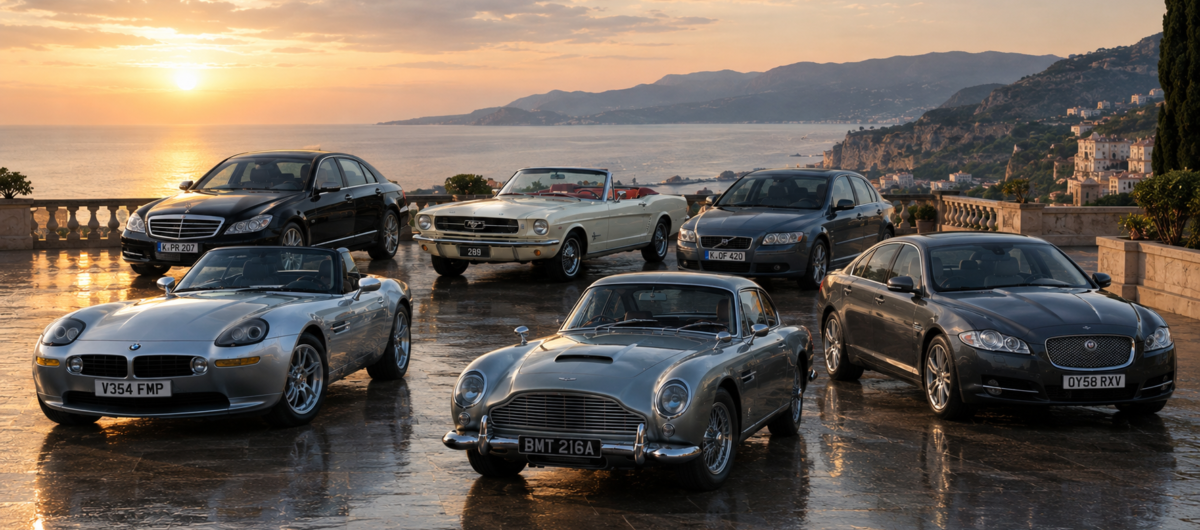
Beyond the Aston Martin: 5 Cars Associated with James Bond
 Added on: October 22, 2026
 Author: OctoClub
1. 5 Iconic Cars Associated with James Bond
2. BMW Z8
5. Jaguar XF
6. Volvo S40 T5
7. Why the cars in James Bond films still matter
5 Iconic Cars Associated with James Bond
James Bond is famous for his sharp suits, sophisticated gadgets and daring escapes. But for automotive enthusiasts, the cars surrounding 007 are just as memorable as the agent himself. From elegant German saloons to rare sports cars and powerful American convertibles, the Bond films have showcased vehicles that reflect the automotive trends of their time.
Some became automotive icons in their own right. Others appeared for only a few minutes but left a lasting impression thanks to a spectacular chase or an unforgettable scene.
Here are five memorable cars from the James Bond films that continues to attract the attention of collectors and enthusiasts.
BMW Z8
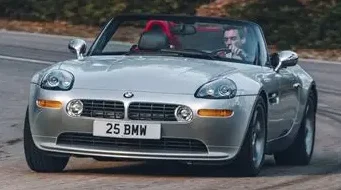
Few modern BMWs combine exclusivity and timeless design quite like the Z8. Introduced in 1999, this distinctive roadster drew inspiration from the legendary BMW 507 of the 1950s, translating its long bonnet, sculpted wings and minimalist styling into a modern package.
The Z8 appeared in The World Is Not Enough (1999), starring Pierce Brosnan as James Bond. As expected, Q had equipped the car with an assortment of special features, including remote-control operation and missiles concealed behind the side air intakes.
Unfortunately, the Z8’s time in the film was short-lived. During a mission, a helicopter fitted with a large cutting blade slices the roadster in half, creating one of the more memorable automotive moments in the franchise.
The real BMW Z8 was considerably more durable than its cinematic counterpart. Produced between 1999 and 2003, it featured an aluminium space-frame chassis and bodywork, together with BMW’s 4.9-litre naturally aspirated S62 V8. The same engine powered the E39 M5, producing approximately 400 hp in both applications.
With production limited to around 5,700 cars, the Z8 has become a highly sought-after collector’s model. Its rarity, distinctive styling and connection to James Bond make it particularly appealing to enthusiasts who appreciate cars that stand apart from the ordinary.
Keeping a rare BMW Z8 in good condition
Maintaining a limited-production car can present challenges that go beyond routine servicing. Some interior fittings, trim pieces and specialised components are difficult to source, especially when original production has long since ended.
At OctoClassic, we understand that preserving an uncommon vehicle sometimes requires a different approach. We recently worked directly with a BMW Z8 owner to develop a replacement component for this rare model, demonstrating how collaboration and modern manufacturing can help address the needs of classic car owners.
For owners of rare cars, finding the right part is not always a simple matter of ordering from a catalogue. Sometimes, preserving the details that make a vehicle special requires careful design and a solution tailored to the car.
Ford Mustang Convertible
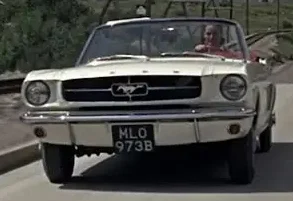
When Goldfinger was released in 1964, the Ford Mustang was still a brand-new model. Introduced in April of that year, the Mustang quickly became one of the defining American cars of the decade.
In the film, a white Mustang convertible driven by Tilly Masterson, played by Tania Mallet, encounters Bond’s Aston Martin DB5 during the pursuit of Auric Goldfinger in the Swiss Alps. The sequence takes place on the spectacular Furka Pass, where the winding mountain road provides a dramatic backdrop for the chase.
The Mustang featured a cream-white exterior, red interior and red convertible top, giving it a distinctive appearance against the Alpine scenery. Bond damages its tyres to bring Tilly to a stop, setting up their encounter.
The Mustang’s role in Goldfinger is a reminder that the cars driven by Bond’s adversaries and other characters can be just as memorable as 007’s own vehicles.
Unlike the sophisticated British grand tourer, the Mustang represented a different automotive philosophy. Its long bonnet, short rear deck and accessible performance made it an appealing alternative to expensive European sports cars. The model helped establish the pony car category and remains one of Ford’s most recognisable designs.
Today, early Mustangs are popular among collectors who value their unmistakable proportions and connection to the golden age of American motoring.
Although this particular Mustang is not a vehicle we are promoting through a matching OctoClassic product, it deserves its place in any discussion of memorable cars from the Bond films. Its appearance in Goldfinger captures a moment when both the Mustang and the franchise were establishing their place in popular culture.
Mercedes-Benz S 300 W221
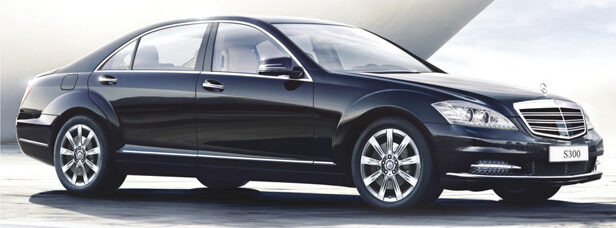
The Mercedes-Benz S-Class has long represented the flagship of the German manufacturer’s passenger-car range. Combining understated styling, advanced technology and exceptional comfort, it has appeared in numerous films and television productions where a luxury saloon is needed to convey authority and sophistication.
In Skyfall (2012), a black Mercedes-Benz S 300 W221 appears during the pursuit of Patrice, played by Ola Rapace. Bond, portrayed by Daniel Craig, follows the assassin through Shanghai, using the city’s illuminated elevated roads and modern architecture as the backdrop for the sequence.
The car shown is a facelifted W221-generation S-Class, most likely from around 2011. Its understated black exterior and tan interior reflect the model’s traditional emphasis on executive comfort rather than overt sportiness.
The W221 generation was produced from 2005 to 2013, with the facelift introduced for the 2010 model year in many markets. The S-Class was available with a range of engines and specifications depending on the market, making it important to identify the exact version when sourcing replacement parts.
Although the Mercedes is not one of Bond’s most famous personal cars, its appearance in Skyfall illustrates how a luxury saloon can contribute to the atmosphere and visual identity of an action sequence.
Jaguar XF
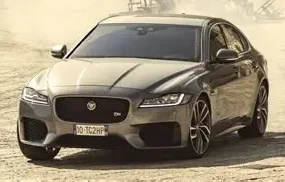
The Jaguar XF made its appearance in No Time to Die during a dramatic chase sequence filmed in Matera, southern Italy. Rather than serving as Bond’s personal vehicle, the XF is driven by Blofeld’s henchmen as they pursue 007 in his Aston Martin DB5.
The sequence makes excellent use of Matera’s narrow streets, stone buildings and tight corners. The XF saloons move through the historic city at speed, creating a contrast between the modern executive cars and the ancient urban setting.
The Jaguar XF was designed to combine the comfort of a luxury saloon with responsive handling. Depending on the version, the model was offered with different engines and drivetrains, including all-wheel-drive configurations.
Its appearance in No Time to Die also reflects Jaguar’s broader role in the Bond universe. Over the years, Jaguar and Land Rover vehicles have featured in numerous action sequences, often providing the opposition to Bond’s more iconic cars.
While the XF may not have the same collector status as a limited-production sports car, it is an interesting example of a contemporary executive saloon becoming part of a major cinematic production.
Volvo S40 T5
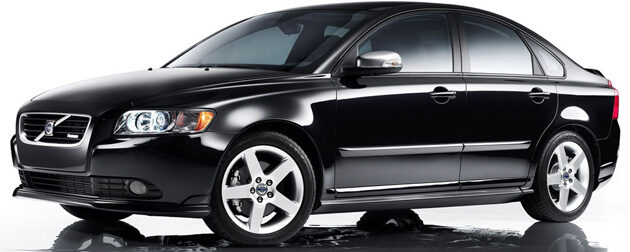
Not every car associated with James Bond needs to be an exotic sports car or an armoured luxury saloon. In Quantum of Solace (2008), Daniel Craig drives a grey Volvo S40 T5 rental car while following Dominic Greene, who is being transported in a Daimler.
The Volvo appears during the Austrian sequence, as Bond follows his target towards the theatre in Bregenz. The scene demonstrates a different side of the agent’s driving: instead of relying on a specially equipped Aston Martin, he uses an ordinary-looking saloon to remain inconspicuous.
The car used for the film was specified as a 2008 Volvo S40 T5 R-Design in Titanium Grey Metallic. Its turbocharged 2.5-litre five-cylinder engine produced approximately 230 hp, giving the compact saloon enough performance for the pursuit.
The S40’s appeal lay in its restrained Scandinavian styling, relatively compact dimensions and practical character. Compared with the extravagant cars traditionally associated with Bond, it was a much more understated choice.
The appearance also reflects a wider trend in the franchise. Product placements and manufacturer partnerships have brought a diverse range of vehicles into the films, including cars that would normally be associated with everyday driving rather than international espionage.
For enthusiasts, the S40 T5 is an interesting reminder that performance and character can be found in less obvious places. It may not command the same attention as a rare supercar, but its combination of a five-cylinder turbocharged engine and discreet design gives it a distinctive place in the late-2000s automotive landscape.
Why the cars in James Bond films still matter
The cars featured in James Bond films reflect more than changing tastes in automotive design. They capture different eras of engineering, from the rise of the American pony car to the sophistication of German luxury saloons and the exclusivity of limited-production roadsters.
Some, such as the BMW Z8, have become collectible because of their rarity and distinctive engineering. Others, including the Mercedes-Benz W221 and Jaguar XF, demonstrate how even relatively understated cars can become memorable through their place in a cinematic story.
For owners, however, a car’s story does not end when production stops. Keeping a vehicle in good condition often means finding replacement components that are no longer readily available. Small details such as headlight washer covers and interior fittings can make a significant difference to the finished result.
At OctoClassic, we focus on replacement parts for classic cars and selected older models, using modern manufacturing methods to help address parts availability challenges. Our work with a BMW Z8 owner is one example of how a specific component can be developed in collaboration when a rare vehicle requires a tailored solution.
Whether you own a BMW, a Mercedes-Benz, a Jaguar or another enthusiast car, maintaining its original character starts with paying attention to the details.
Q: Can replacement parts be made for rare classic cars?
A: Depending on the component and its technical requirements, modern manufacturing methods can offer an alternative when original parts are difficult to find. OctoClassic has worked directly with a BMW Z8 owner to develop a replacement component for this rare model.
Q: Is 3D printing suitable for manufacturing classic car parts?
A: Yes, depending on the application. Modern 3D printing technologies can produce detailed components, including selected interior fittings, covers and trim elements. The appropriate process and material must be chosen according to the part’s mechanical requirements, operating environment and expected durability.
Q: Are 3D-printed replacement parts suitable for restoring a classic car’s original appearance?
A: They can be, particularly for components such as trim pieces, covers and interior fittings. Accurate geometry, an appropriate surface finish and correct preparation for painting can help a replacement blend with the surrounding parts. The result depends on the design, manufacturing process and finishing requirements.
Are you already a proud owner of a BMW Z8, Ford Mustang, Mercedes W221, Jaguar XF and Volvo S40? If so, check out our selection of parts for this car at the following link:
https://octoclassic.com/?s=bmw+z8
https://octoclassic.com/product-category/ford/mustang
https://octoclassic.com/product-category/mercedes-benz/w221
https://octoclassic.com/product-category/jaguar/xf
https://octoclassic.com/product-category/volvo/s40
Photo sources: topgear.com, jamesbond.fandom.com, carscoops.com