






















































How headlights evolved in classic Mercedes-Benz cars?
 Added on: July 6, 2026
 Author: OctoClub
1. Round headlights of the 1950s
3. The famous horizontal headlights of the 1970s
4. Better technology in the 1980s
5. Why original headlights matter during restoration?
6. Choosing replacement headlights
7. Conclusion
Round headlights of the 1950s
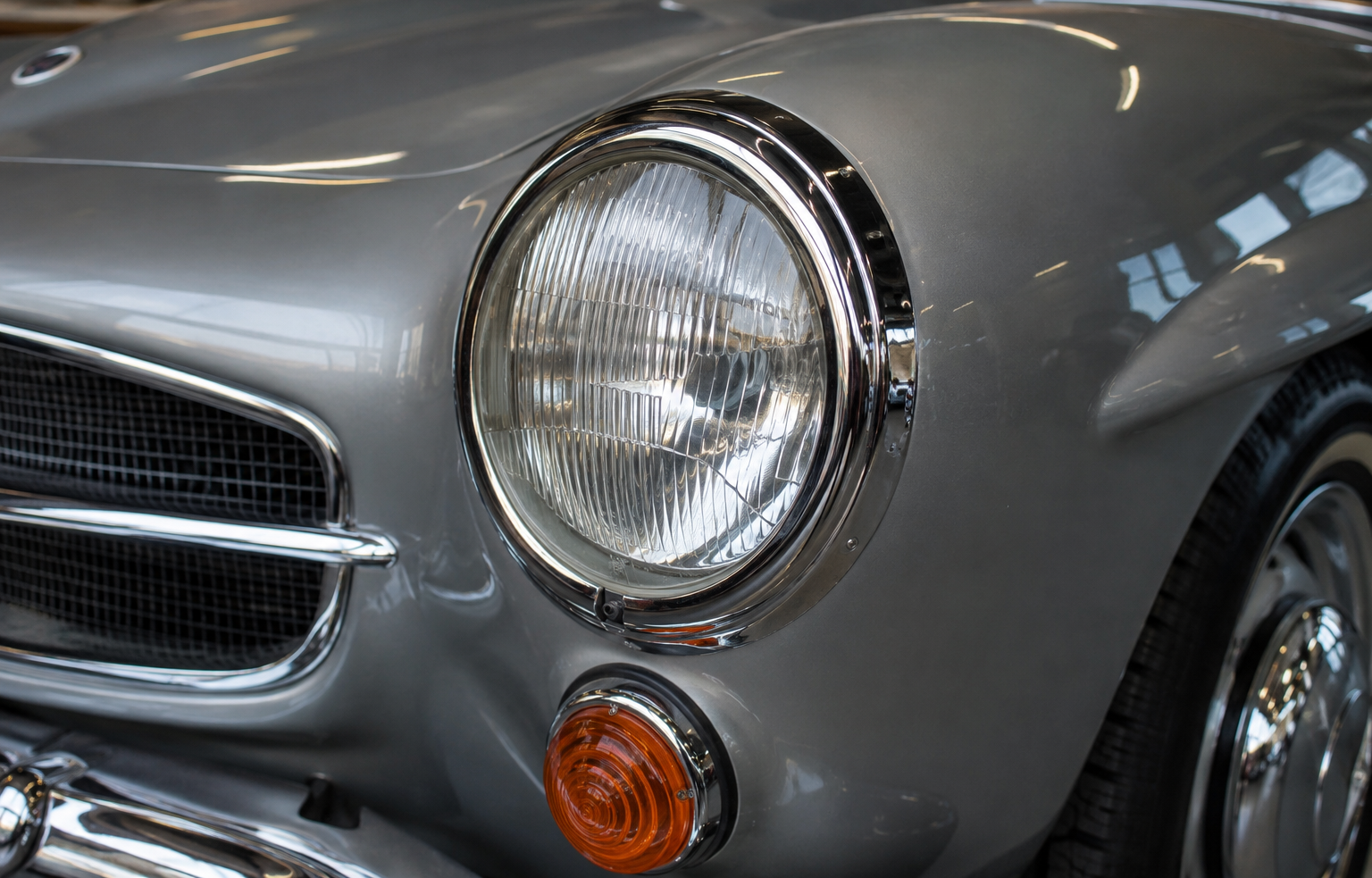
In the 1950s, Mercedes-Benz used large round headlights with chrome surrounds on models such as the Mercedes-Benz 180 (W120), 190 (W121), and the legendary 300 SL Gullwing.
These headlights were simple, durable, and easy to maintain. At the time, lighting technology focused on reliability rather than advanced performance, but the classic round design quickly became one of Mercedes-Benz’s defining styling features.
Today, original glass lenses and chrome bezels remain highly desirable among collectors.
New designs in the 1960s
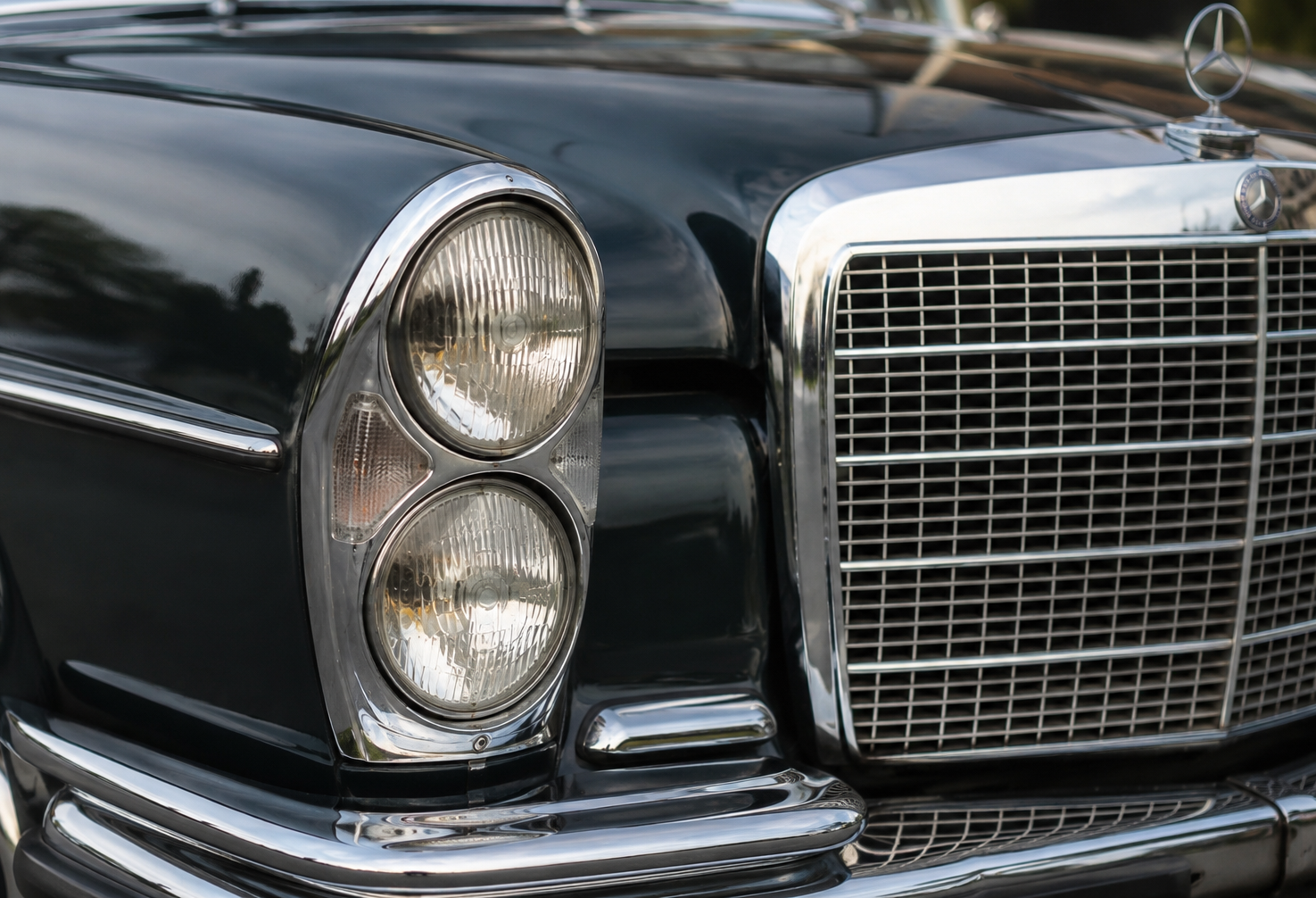
During the 1960s, Mercedes-Benz introduced more distinctive headlight layouts. Models like the W111 “Fintail” featured vertically stacked headlights that gave the cars a unique appearance while improving light distribution.
Regional regulations also influenced design. European models typically used glass headlights with replaceable bulbs, while North American versions often featured sealed-beam units required by local laws.
This period marked the beginning of more specialized lighting systems across different markets.
The famous horizontal headlights of the 1970s
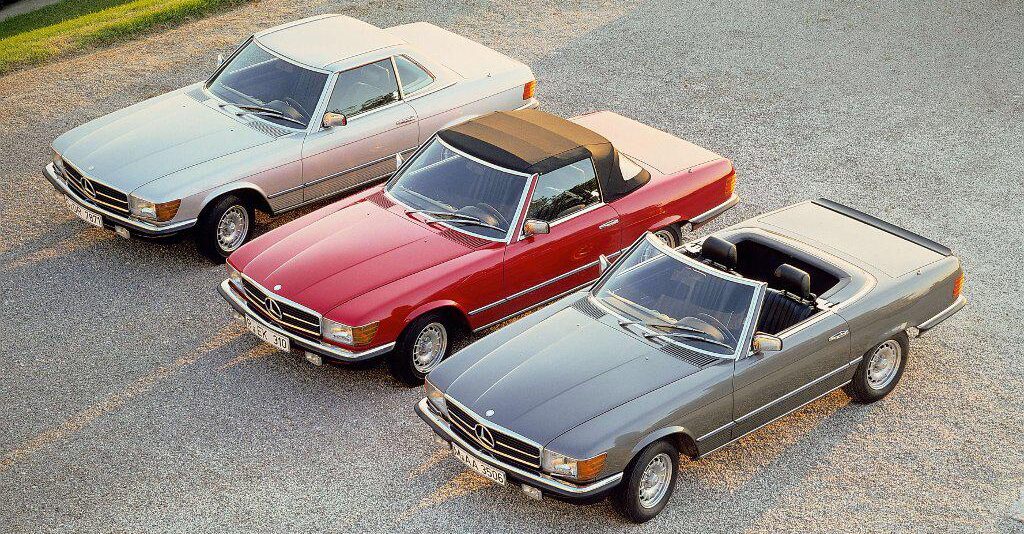
The 1970s brought one of the most iconic Mercedes headlight designs.
Cars such as the W114, W115, W116 S-Class, and R107 SL introduced wide horizontal headlight assemblies that became closely associated with the Mercedes-Benz brand.
Improved reflector technology produced brighter, more evenly distributed light, making nighttime driving safer while preserving the elegant styling that enthusiasts still admire today.
Better technology in the 1980s
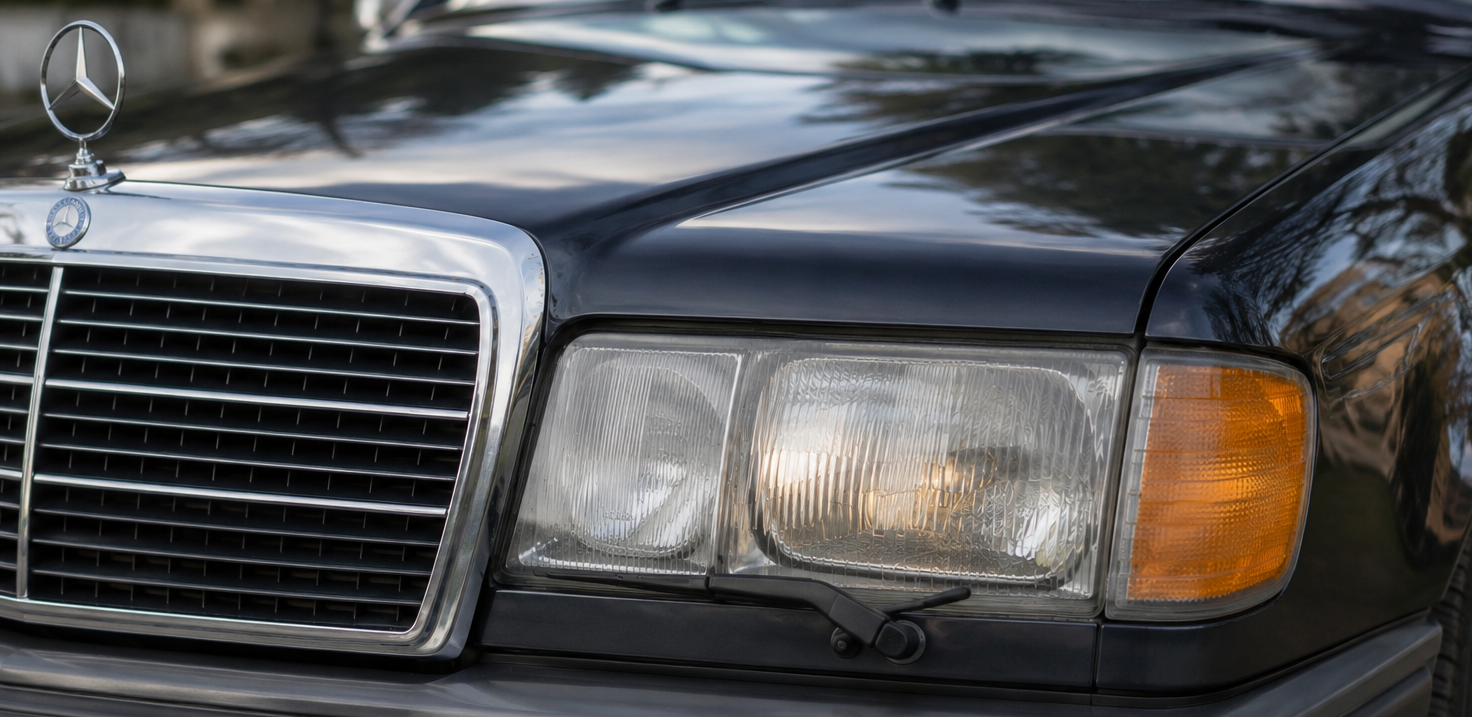
By the 1980s, Mercedes-Benz focused on improving aerodynamics and driving safety.
Models including the W124, W126, and W201 featured larger rectangular headlights with improved reflector systems and halogen bulbs. These advancements delivered brighter illumination, longer bulb life, and better visibility in poor weather conditions.
The smoother integration of headlights into the body also reflected changing automotive design trends.
Why original headlights matter during restoration?
For restorers, headlights are much more than cosmetic components.
Original Mercedes headlight assemblies often differ depending on:
- production year,
- market specification (Europe or North America),
- trim level,
- optional equipment.
Installing incorrect headlights can reduce a vehicle’s authenticity and value.
Many classic Mercedes owners carefully search for original equipment or high-quality reproduction parts that closely match factory specifications. Proper lenses, reflectors, seals, chrome surrounds, and mounting hardware all contribute to an accurate restoration.
When replacing headlights, it is also important to inspect rubber seals, adjustment mechanisms, wiring, and bulb holders, as these components naturally deteriorate with age.
Choosing replacement headlights
Finding replacement headlights requires careful attention to detail. Not every component marketed as compatible offers the same quality or historical accuracy.
Before purchasing replacement parts, owners should verify:
- the exact Mercedes model and chassis code,
- production year,
- left-hand or right-hand traffic configuration,
- European or North American specification,
- lens markings and homologation,
- compatibility with original mounting brackets and wiring.
High-quality replacement components help maintain the vehicle’s appearance, improve nighttime visibility, and preserve long-term value. Investing in correctly manufactured parts often prevents future fitment issues and reduces the need for modifications.
Conclusion
The evolution of Mercedes-Benz headlights reflects decades of innovation in automotive engineering. From simple round lamps of the 1950s to advanced halogen systems of the 1980s, every generation improved safety while creating the distinctive styling that defines classic Mercedes vehicles today.
For restorers and collectors, understanding these differences is essential when identifying original components and selecting the right replacement parts. Authentic headlights not only improve visibility but also help preserve the history, character, and long-term value of every classic Mercedes-Benz.
Q: How did Mercedes-Benz headlights change over the years?
A: Mercedes-Benz headlights evolved from round sealed-beam lamps in the 1950s to horizontal glass headlights in the 1970s and integrated halogen systems in the 1980s, improving both safety and design.
Q: Why are original headlights important for classic Mercedes cars?
A: Original headlights preserve authenticity, ensure proper fitment, and help maintain the collector value of classic Mercedes-Benz vehicles.
Q: Are European and North American headlights different?
A: Yes. European models often featured glass headlights with replaceable bulbs, while many North American versions used sealed-beam headlights to meet local regulations.
Q: Can reproduction headlights be used during restoration?
A: Yes. High-quality reproduction headlights are a reliable alternative when original parts are unavailable, provided they match the factory specifications.
Q: What should you check before buying replacement headlights?
A: Verify the model, chassis code, production year, market specification, traffic orientation, and compatibility with the original mounting system and wiring.
Are you already a proud owner of a Mercedes-Benz? If so, check out our selection of parts for this car at the following link: