

























































Mercedes G-Class: Power, prestige, and pure character
 Added on: February 23, 2026
 Author: OctoClub
1. Beyond prestige: The real reason to consider one
3. Built on a 1970s foundation
5. Smaller than it looks, more luxurious than expected
6. 563 horsepower in a boxy legend
7. Conclusion
Beyond prestige: The real reason to consider one
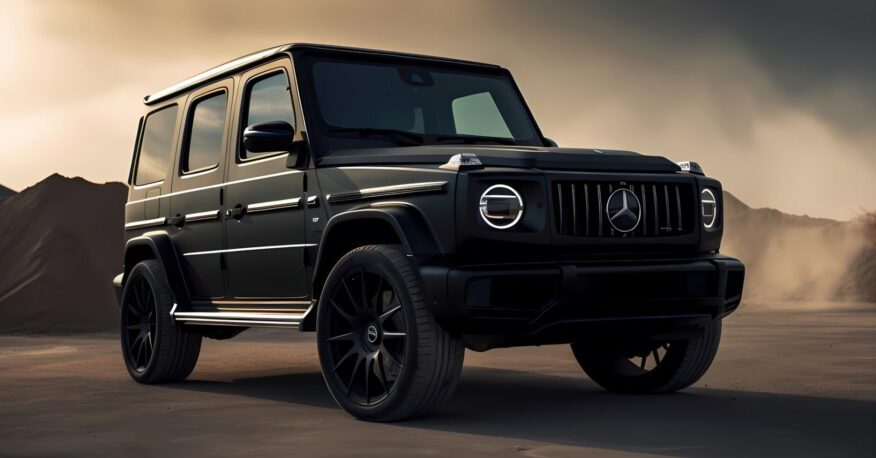
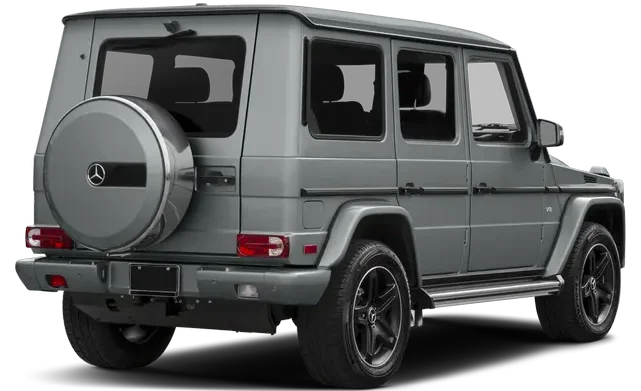
The Mercedes-Benz G-Class is often bought for image. Its squared-off silhouette, unmistakable stance, and commanding presence turn it into a status symbol.
Yet its true appeal lies elsewhere.
This is not merely a luxury SUV. It is one of the most uncompromising off-road vehicles ever built. Three locking differentials. Permanent four-wheel drive. A ladder-frame chassis. Solid axles. And in G63 form, a 5.5-liter twin-turbocharged V8 producing 563 horsepower.
Underneath the leather and carbon fiber sits something engineered with serious intent.
What does €58,000 buy?
In today’s market, €58,000 does not stretch as far as it once did-especially in the world of new off-road vehicles.
That budget might secure a new Ford Bronco, Jeep Wrangler, or Toyota 4Runner. However, higher-performance or well-equipped versions of these models quickly exceed €60,000.
What they will not offer is a twin-turbo V8 with over 560 horsepower. Nor will they combine old-school mechanical hardware with high-end materials in quite the same way.
Comparing this eight-year-old Mercedes to other eight-year-old SUVs misses the point. The real comparison is between this used G63 and brand-new off-roaders at the same price.
Built on a 1970s foundation
Mercedes-Benz built some of the most durable cars of the 1980s-models like the Mercedes-Benz W123 and the Mercedes-Benz W126 became known for extraordinary longevity.
In the early 2000s, however, quality inconsistencies appeared across certain model lines. By 2016, improvements were underway, but skepticism remained.
The G-Class occupies a unique position. Although it continued to be sold as a modern vehicle-with airbags, ABS, stability control, and infotainment systems-its core design traces back to the late 1970s.
The result is a vehicle engineered with old-world solidity, yet filled with modern electronics and complex twin-turbo plumbing. Repairs can be labor-intensive due to tight packaging under the hood. However, this generation of G63 has developed a reputation for being relatively robust overall.
Costs and surprises
A seemingly minor component, such as a thermostat, can turn into a significant expense. In the G63, the thermostat is buried deep within the engine bay rather than mounted conveniently on top. Replacement can cost approximately €1,000, primarily due to labor and premium parts pricing.
Beyond such issues, well-maintained examples often hold up impressively. High-quality leather upholstery, solid switchgear, and durable interior materials contribute to a sense of longevity. Even with higher mileage, many examples continue to feel tight and substantial.
This durability reinforces the idea that the G-Class was built differently from most modern SUVs.
Smaller than it looks, more luxurious than expected
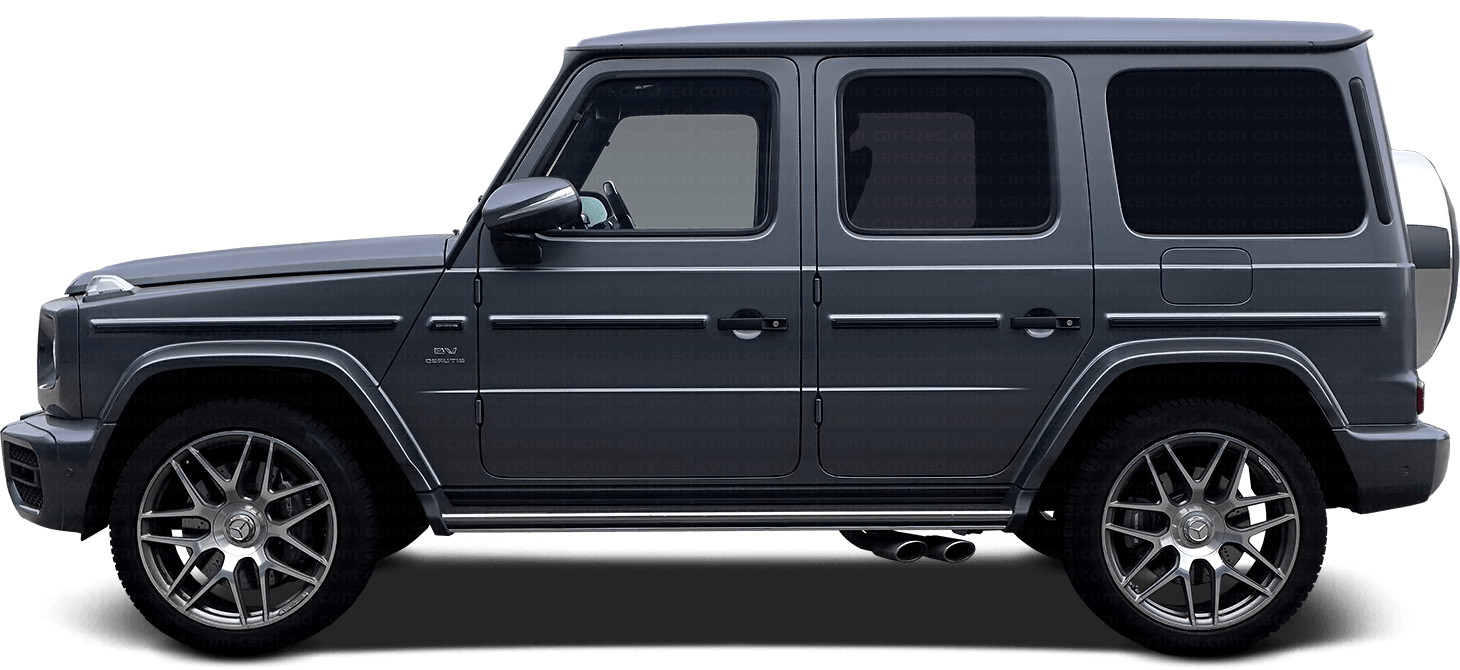
Visually imposing, the G-Class appears massive. In reality, it is shorter and significantly narrower than many modern four-door off-road SUVs.
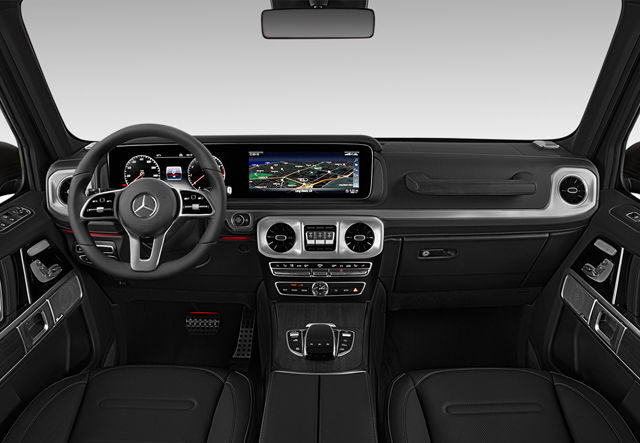
Inside, the cabin feels intimate. Shoulder room is limited, and the center console is narrow. Yet the materials elevate the experience: quilted leather seats, stitched dashboard surfaces, carbon fiber trim, heated and ventilated seating, dual-zone climate control, and adaptive cruise control.
The technology, however, reveals its age. A small, non-touch display and dated interface cannot compete with the latest infotainment systems found in new competitors. Modern SUVs offer larger screens and more intuitive controls.
But none deliver quite the same atmosphere.
563 horsepower in a boxy legend
Driving dynamics are unlike most modern SUVs. The closest contemporary comparison might be the Jeep Wrangler 392, which similarly pairs traditional off-road architecture with substantial power.
Solid axles and firm suspension tuning create a distinctly mechanical, almost agricultural feel over bumps. And then there is the engine.
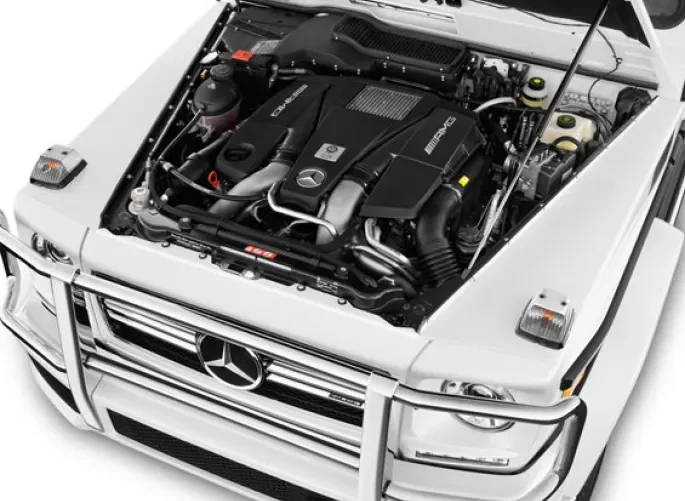
The 5.5-liter twin-turbo V8 produces immense torque at low engine speeds. Acceleration is immediate and forceful. The chassis feels almost overwhelmed by the power available-a combination that should not work as well as it does.
Yet it creates a uniquely engaging experience. Raw. Mechanical. Excessive in the best possible way.
Conclusion
From a purely practical perspective, the Mercedes G-Class is not the sensible option. Newer vehicles offer better fuel efficiency, modern technology, warranties, and potentially lower maintenance costs.
But rational decisions rarely define automotive passion.
At €58,000, the opportunity to own a Mercedes G-Class-once priced at €150,000, powered by a twin-turbo V8 and built on decades of heritage-becomes compelling.
Not because it is the smartest purchase.
But because it is one of the most interesting.
Q: Why is the Mercedes-Benz G-Class so expensive?
A: The G-Class is expensive because it combines luxury materials with a unique engineering foundation. Features such as a ladder-frame chassis, three locking differentials, permanent four-wheel drive, and hand-built elements separate it from typical luxury SUVs.
Q: Is the Mercedes-AMG G63 a real off-road vehicle or just a luxury SUV?
A: The G63 is both. Despite its luxury image, it retains the core off-road architecture of the original G-Class, including a body-on-frame platform, solid axles, and locking differentials. It is one of the few luxury vehicles that can genuinely handle extreme terrain.
Q: What makes the Mercedes G-Class different from other SUVs?
A: Unlike most modern SUVs built around comfort and efficiency, the G-Class was originally designed as a military and utility vehicle. Its rugged engineering, iconic design, and powerful AMG versions give it a unique personality.
Q: Does the Mercedes G-Class hold its value well?
A: Yes. The G-Class has historically maintained strong resale values due to limited supply, iconic status, strong demand, and its unique position in the luxury SUV market.
Q: Why is the Mercedes G-Class considered a future classic?
A: The G-Class combines several traits valued by collectors: a distinctive design, old-school mechanical engineering, limited alternatives, and a powerful internal combustion engine. Models like the G63 AMG represent an era before high-performance luxury SUVs became fully electrified.
Q: How does the G63 compare with a Jeep Wrangler or Ford Bronco?
A: The Wrangler and Bronco offer excellent off-road capability at lower prices, but they do not provide the same level of luxury, performance, or exclusivity. The G63 combines serious off-road engineering with a premium interior and a powerful V8.
Q: What are the biggest disadvantages of owning a Mercedes G63 AMG?
A: The main disadvantages are high fuel consumption, expensive maintenance, outdated technology compared with newer SUVs, and limited interior space despite its large exterior dimensions.
Inspired by the analysis of our friend @TFLcar. Make sure you check his other videos
https://www.youtube.com/@TFLcar
Are you already a proud owner of a Mercedes G-Class? If so, check out our selection of parts for this car at the following link:
https://octoclassic.com/product-category/mercedes-benz/puch-g
Photos sources: 4kwallpapers.com, carsidez.com, cars.usnews.com