



















































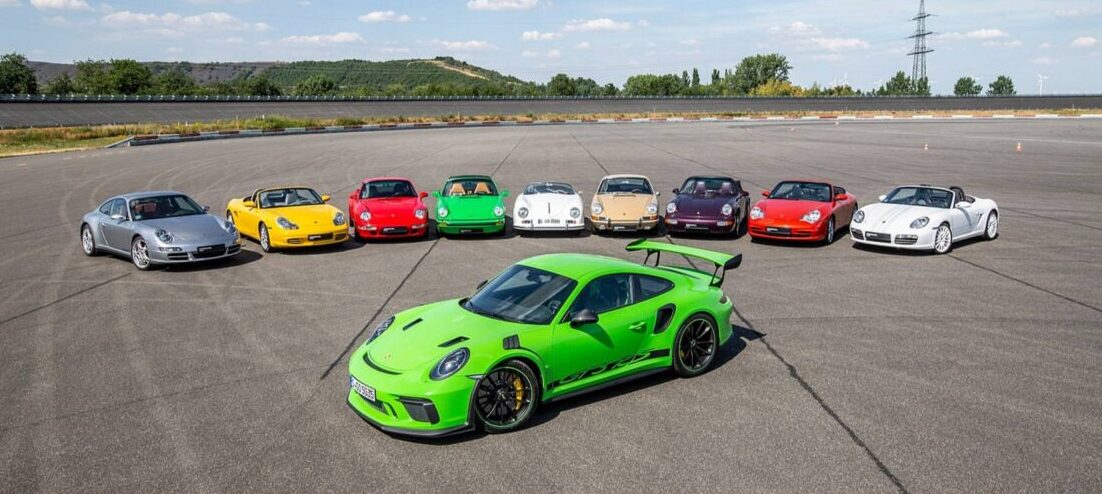
Porsche 911 Carrera market shift: Prices fall, opportunities rise
 Added on: April 3, 2026
 Author: OctoClub
2. Where the pressure is strongest: The 992 generation
3. New vs. Old – 992.2 and 991 market dynamics
4. Classic stability – 997 and 996 vs. the broader market
7. Conclusion
A market in transition
Prices across the Carrera lineup have continued to decline, albeit unevenly. Cars are taking longer to sell, and sellers are increasingly willing to negotiate. In some cases, vehicles lingering on the market are closing at noticeably discounted prices.
However, the key insight is this: not all Carreras are affected equally. The extent of price softening depends heavily on the model generation and even the specific model year.
For buyers, this creates an opportunity. Understanding where the pressure points are can easily translate into savings of several thousand euros.
Where the pressure is strongest: The 992 generation
To understand the current trend, we need to start with the latest generation – the 992.
During the pandemic boom, Carrera prices surged and peaked around 2022. What followed was a correction in 2023, a brief stabilization, and then a modest rebound in early 2025 – largely driven by MSRP increases from Porsche.
But by late 2025, momentum faded. Now, in 2026, prices are clearly declining again.
- Base models: down 3.6%
- S models: down 1.7%
These drops are statistically significant, meaning they reflect real market movement – not random fluctuation.
Short-term trends matter most here, and they’re pointing downward across the board, including GTS, T, and AWD variants.
New vs. Old – 992.2 and 991 market dynamics
A closer look reveals a familiar pattern: newer cars depreciate faster.
- 2024 models have seen the steepest declines
- 2023 – 2022 models are slightly below peak
- 2021 – 2020 models remain relatively stable
This trend is mirrored in both the base Carrera and Carrera S segments, as well as in the newer 992.2 generation, where prices have also started to fall after a brief rise in early 2025.
Looking at the 991 generation:
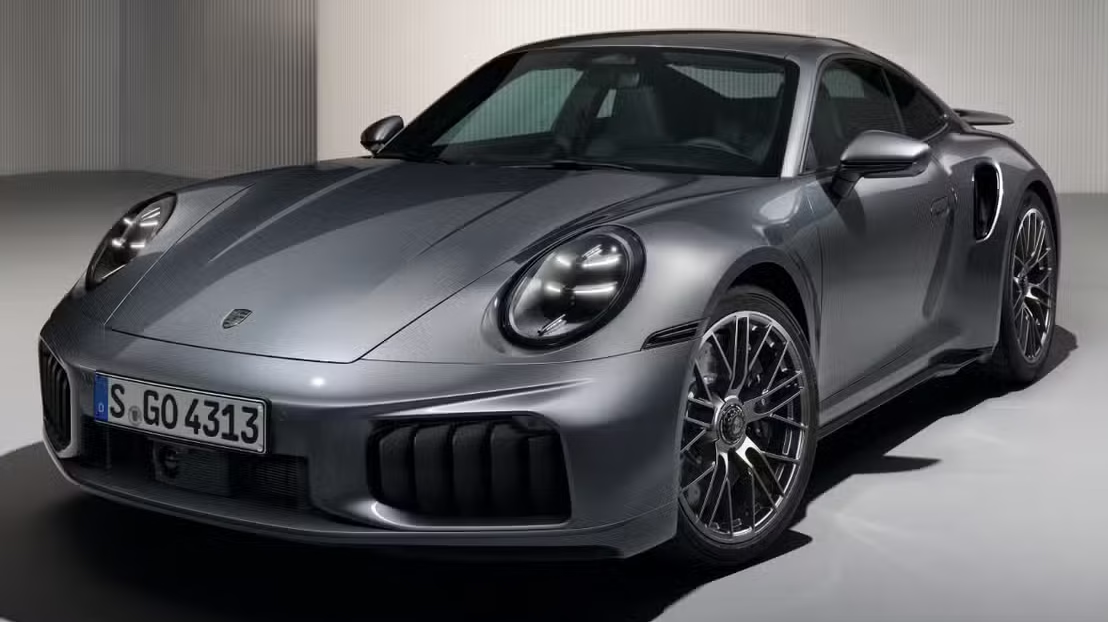
- 991.2 (facelift): GTS trend has turned downward, S models still show upward momentum, while base models have flattened and lost statistical strength in yearly gains.
- 991.1 (pre-facelift): Prices dipped slightly in recent months but remain up year-over-year (base +5.7%, S +9.4%), with GTS models continuing to perform strongly.
Classic stability – 997 and 996 vs. the broader market
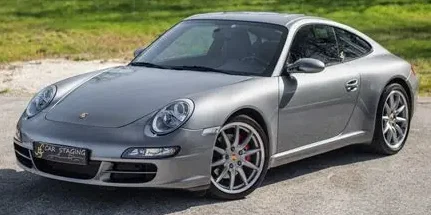
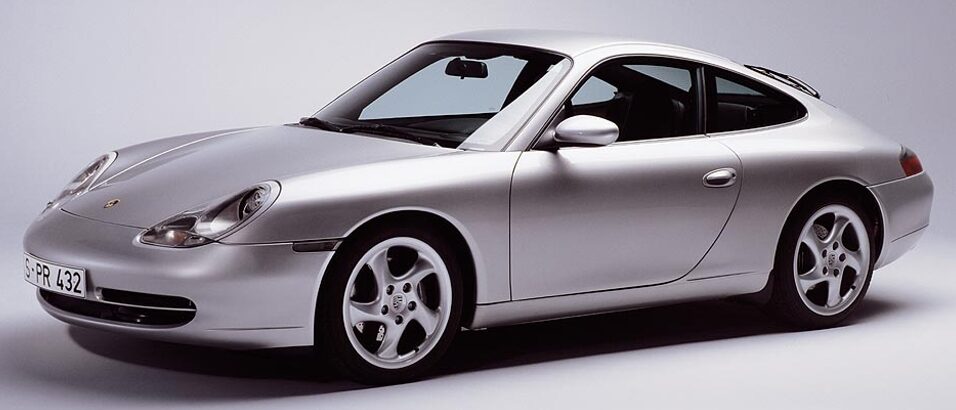
Older generations like the 997 and 996 are largely decoupled from newer market dynamics.
- 997 models: steady growth since 2024, with base (+13.5%) and S (+13.1%) nearing record levels
- 996 models: base up 4.9 – 8.4%, while 4S variants climbed 14.2%
At the same time, the broader sports and supercar market – including Ferrari, Lamborghini, and McLaren – has largely flattened.
While that market stabilized, 911 prices weakened, effectively erasing their long-standing outperformance. Today, the 911 market is moving in line with the broader segment, not ahead of it.
Warning signs
One of the clearest warning signals comes from sales speed.
- Historically, about 20% of 992.1 cars remained unsold after three months
- In February 2026, this jumped to 40%
This sharp increase indicates weakening demand.
At the same time:
- Unsold cars are now discounted by around 4% on average
- Slightly more aggressive than a year ago
Rising inventory combined with stronger discounting suggests that further short-term price declines are likely.
What this means for Buyers
If you’re considering a 911 Carrera, your strategy should depend on the generation:
For 992 Buyers
- Stronger negotiating position
- Focus on cars that have been listed longer
- Discounts are increasingly common
More cautious buyers may want to wait, as prices could continue to fall in the coming months.
For 991 Buyers
- Slightly improved position, but less dramatic
- The next months will determine whether prices stabilize or decline
For 996 and 997 Buyers
- Stable, less volatile markets
- Better suited for long-term value retention
Conclusion
The Porsche 911 market remains fundamentally strong – but it’s no longer overheating.
What we’re seeing is a healthy correction, not a collapse. Prices are adjusting, supply is increasing, and buyers – especially in the 992 segment – are finally gaining leverage.
For enthusiasts and investors alike, this creates a rare window of opportunity.
Q: How much cheaper can I get a 992 compared to last year?
A: Depending on the spec and model year, prices are already a few percent lower, and with negotiation you can often save several thousand euros compared to peak levels.
Q: Why are some 911s selling quickly while others sit for months?
A: It usually comes down to price, specification, and history. Well-priced, desirable specs still move fast, while overpriced or less attractive cars linger.
Q: Which 911 should I choose if I don’t want to lose money?
A: Older generations like the 996 and 997 are generally more stable. They’re less exposed to current market fluctuations.
Q: Is it better to wait a few months before buying?
A: If you’re targeting a 992, waiting could improve your position. Prices may soften further as inventory builds.
Q: What’s the biggest mistake buyers make in this market?
A: Overpaying for a “perfect” car in a declining market. Patience and comparison shopping can lead to significantly better deals.
Inspired by the analysis of our friend @fourwheeltrader. Make sure you check his other videos
https://www.youtube.com/@fourwheeltrader
Are you already a proud owner of a Porsche 911? If so, check out our selection of parts for this car at the following link:
https://octoclassic.com/product-category/porsche/911
Photos sources: carbuzz.com, cazor-auto-passion.fr, autoevolution.com, MOTOR1