
























































Could 2027 Be the Best Time to Buy a Used Car?
 Added on: November 18, 2026
 Author: OctoClub
1. Is the used car market heading for a price war in 2027?
2. CarMax is adjusting its business strategy
3. Rising vehicle supply could push prices down
4. Expensive car financing is becoming a major concern
5. Could 2027 bring a used car price war?
6. Why used car buyers could gain an advantage
7. What should we expect from the used car market in 2027?
Is the used car market heading for a price war in 2027?
The US used car market could be approaching a major turning point. After several years of high prices and limited affordability, signs of a changing market are beginning to emerge. CarMax is adjusting its pricing strategy, wholesale vehicle values are showing signs of decline, and an increasing supply of off-lease vehicles could put further pressure on dealerships.
At the same time, high interest rates and longer loan terms are making car ownership increasingly expensive. Could 2027 be the year when buyers finally gain more negotiating power?
CarMax is adjusting its business strategy
CarMax, one of the largest used vehicle retailers in the United States, is placing greater emphasis on competitive pricing, operational efficiency and inventory turnover.
The company aims to achieve approximately €182 million in annualized operating expense savings by the end of fiscal year 2027. It is also accepting lower gross profit per retail vehicle, suggesting that selling more cars at smaller margins is becoming a priority.
However, lower vehicle margins do not necessarily mean lower overall profits. Financing remains an important source of revenue. CarMax’s auto financing income reportedly increased by 32.1%, reaching approximately €123.4 million in the latest quarter covered by the source material.
This highlights an important aspect of the used car business: dealerships can generate substantial revenue not only from vehicle sales but also from the financing agreements offered to customers.
Rising vehicle supply could push prices down
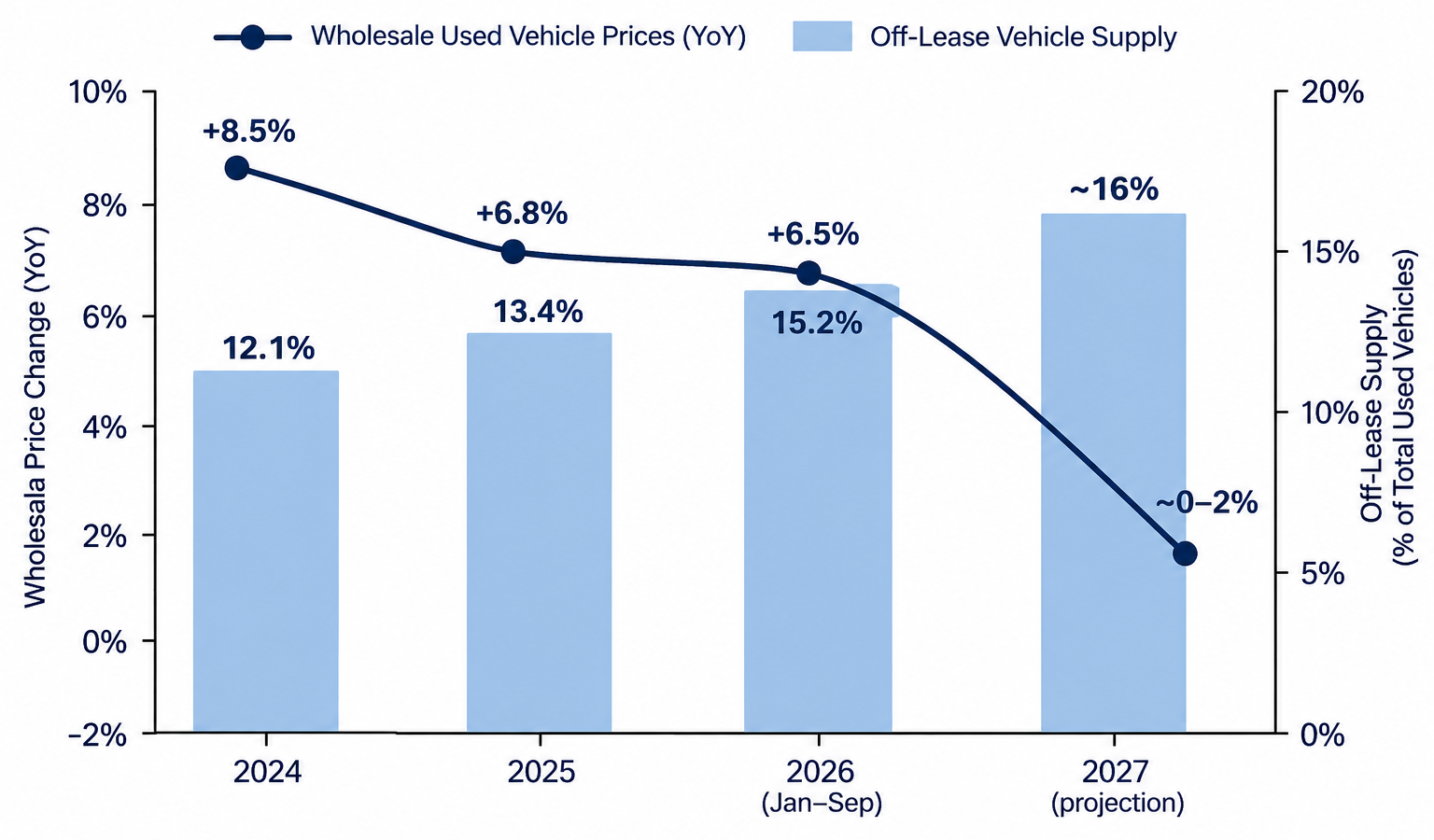
One of the biggest factors influencing the used car market in 2027 could be the growing supply of vehicles.
Following the pandemic, many consumers entered into leasing agreements. As these contracts expire, more relatively recent vehicles are returning to dealerships, increasing the availability of used cars.
At the same time, high purchase prices and financing costs are limiting consumer demand. This combination of increasing supply and fewer financially comfortable buyers could put downward pressure on vehicle values.
There are already signs of a changing market. According to the figures cited in the source material, Cox Automotive reported a 1.1% decline in wholesale used vehicle prices in September 2026, despite an estimated year-over-year increase of 6.5–6.8%.
Although one month’s decline does not confirm a major market correction, it is an important development when considered alongside growing inventory and affordability challenges.
Expensive car financing is becoming a major concern
High vehicle prices are only part of the problem. Financing costs are making car ownership increasingly difficult, with many consumers taking out longer loans and facing substantial monthly payments.
The figures presented in the source material illustrate the situation:
-
US auto loan balances reached approximately €1.56 trillion at the end of the second quarter of 2026.
-
More than 21% of newly financed vehicles in the third quarter of 2026 had monthly payments exceeding €910.
-
Almost 25% of auto loans originated in 2026 had repayment periods of 84 months, or seven years.
-
Approximately 29% of trade-ins associated with new vehicle financing involved negative equity, averaging more than €6,825.
Negative equity occurs when a vehicle owner owes more on their loan than the car is currently worth. When trading in the vehicle, the outstanding debt may be transferred into the financing agreement for the next purchase.
This creates a cycle in which buyers continue accumulating debt while their vehicles lose value. Longer loan terms can make the situation worse, as owners may still be making payments years after significant depreciation has occurred.
Could 2027 bring a used car price war?
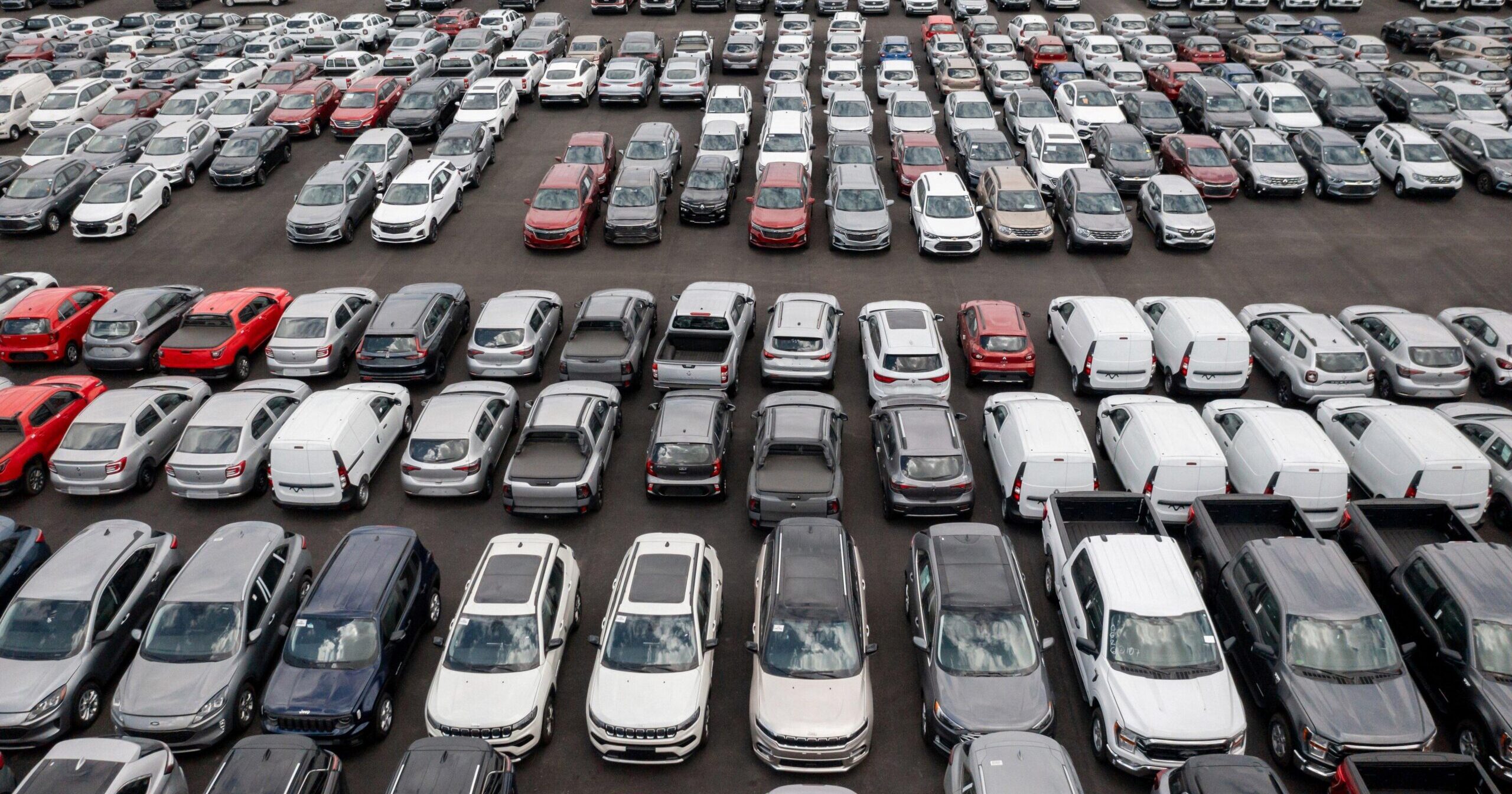
Increasing inventory could force dealerships to compete more aggressively for buyers.
Many dealerships finance their inventory through arrangements known as floorplan financing. This means they pay interest on vehicles held in stock, and the longer a car remains unsold, the higher the associated costs become.
When dealerships hold dozens or hundreds of vehicles, these expenses can quickly add up. As a result, slow-moving inventory creates pressure to reduce prices and introduce more competitive offers.
The growing supply of off-lease vehicles could intensify this situation, particularly when multiple dealerships offer similar models with comparable specifications and mileage.
CarMax’s increased focus on competitive pricing may also encourage other retailers to adjust their strategies.
This does not mean that every used vehicle will become significantly cheaper. Desirable models, well-maintained examples and sought-after specifications may continue to hold their value. However, vehicles that remain in stock for extended periods could become more attractive opportunities for buyers.
Why used car buyers could gain an advantage
If inventory continues to grow while demand remains under pressure, the balance of power between dealerships and buyers could begin to shift.
Consumers may benefit from a wider selection of vehicles, more competitive prices and greater flexibility when comparing offers. Dealerships, meanwhile, will have to manage inventory more carefully and find ways to sell vehicles before carrying costs reduce their profitability.
However, lower purchase prices do not automatically mean cheaper car ownership. Financing terms, interest rates, depreciation and maintenance expenses remain important considerations.
Buyers should also pay attention to a vehicle’s service history, mechanical condition, mileage and accident records rather than focusing exclusively on its advertised price.
What should we expect from the used car market in 2027?
Several factors could reshape the used car market in 2027: increasing off-lease supply, affordability challenges, tighter lending conditions and rising inventory costs for dealerships.
CarMax’s changing approach to pricing and operational efficiency may be an indication of how major retailers are preparing for a more competitive environment.
A nationwide used car price war is not guaranteed, but the conditions for stronger competition are becoming increasingly visible. If supply continues to outpace demand, dealerships may have little choice but to become more flexible with their pricing.
For buyers, this could create opportunities that have been harder to find in recent years. The key will be to look beyond the advertised price and consider the total cost of ownership before making a purchase.
Q: What factors have the biggest impact on the value of a used car?
A: Mileage, service history, mechanical condition, accident records, model popularity and overall market demand all influence a vehicle’s resale value.
Q: Do used cars lose value at the same rate as new cars?
A: No. New cars typically experience their fastest depreciation during the first few years. Used vehicles generally depreciate more gradually, although the rate depends on the model, age and market conditions.
Q: Why do some used cars hold their value better than others?
A: Reliability, limited production numbers, strong brand reputation, low maintenance costs and consistent demand can help certain models retain their value.
Q: Is buying a used car from a dealership safer than buying privately?
A: A dealership may offer additional consumer protections, financing options and vehicle history information. However, buyers should still arrange an independent inspection and review all documentation before purchasing.
Q: What should buyers check before purchasing a used vehicle?
A: Important checks include the VIN, service records, ownership history, accident reports, mileage consistency, mechanical condition and signs of previous repairs.
Q: How does mileage affect a used car’s resale value?
A: Higher mileage generally reduces resale value because it can indicate greater wear and potential maintenance needs. However, a well-maintained high-mileage vehicle may be a better purchase than a poorly maintained car with lower mileage.
Q: Are older cars becoming more attractive investments?
A: Some older vehicles, particularly rare or historically significant models, can appreciate in value. However, most used cars should be considered purchases rather than investments, as maintenance, storage and restoration costs can outweigh potential gains.
Inspired by the analysis of our friend @UntamedMotors. Make sure you check his other videos
https://www.youtube.com/@UntamedMotors
Are you already a proud owner of a Classic Car? If so, check out our selection of parts for this car at the following link:
Photos sources: GTspirit